


Ottawa says a deal on e-signatures, data flows and paperless trade is within reach. Here is what it would cover, what is at stake for Canadian exporters, and what is still unknown before leaders meet.
Canada and the European Union are close to finishing a Canada-EU digital trade agreement that would make it simpler for businesses and consumers to buy and sell across the Atlantic online. International Trade Minister Maninder Sidhu pressed the talks forward during a stop in Ireland this week, ahead of the Canada-EU Summit in Montreal next week.
Sidhu says negotiators are near agreement on a set of rules covering electronic signatures and contracts, paperless trade, secure cross-border data flows, duties on electronic transmissions and e-commerce. The deal has not yet been finalized. Ottawa expects the next steps in the partnership to be announced when leaders meet in Montreal.
Maninder Sidhu’s Ireland Stop and the Push Toward Montreal
The minister’s visit to Ireland was framed around one goal: getting the digital trade talks across the line before the two sides sit down together in Quebec. Timing matters in trade diplomacy. A summit gives leaders a natural stage to announce progress, and negotiators often work toward that kind of deadline.
Sidhu has described the two sides as close to a deal. He has not said the agreement will be signed or formally concluded at the summit. What the government has indicated is narrower: that the next steps in the Canada-EU partnership are expected to be laid out there.
That distinction is worth keeping in mind. An announcement could take several forms, from a concluded text to a statement that negotiations have reached a final stage. Until the summit, the precise outcome is not specified.
Five Areas the Canada-EU Digital Trade Agreement Would Cover
According to Sidhu, the agreement under discussion focuses on the practical plumbing of online commerce. These are the areas he identified:
- E-signatures and e-contracts: rules that would help electronic signatures and digitally concluded contracts be recognized when deals cross the Atlantic.
- Paperless trade: moving trade documents away from paper and toward electronic formats, cutting time spent on forms at the border.
- Secure cross-border data flows: commitments on how data can move between Canada and the EU while keeping it protected.
- Duties on electronic transmissions: terms on whether customs duties apply to digital content and services sent electronically.
- E-commerce: broader provisions aimed at making online buying and selling between the two markets easier.
The detailed legal wording of each commitment has not been made public. It is not yet known how far each provision goes, what exceptions apply, or how disputes would be handled.
Nearly $15 Billion in Digital Services Exports at Stake
The minister pointed to one headline figure to explain why the talks matter. Canada exported nearly $15 billion in digital services to the European Union in 2024, according to Sidhu.
Digital services can include a wide range of activity, such as software, cloud-based tools, online platforms, professional services delivered remotely and digital media. The government has not released a breakdown of which sectors make up the total, or how the figure compares with earlier years.

For exporters, the logic of a digital agreement is predictability. When rules on data, contracts and digital duties are clear and agreed in advance, firms can plan their European expansion with fewer legal unknowns.
| Item | What has been reported |
|---|---|
| Lead Canadian minister | Maninder Sidhu, International Trade |
| Recent diplomatic stop | Ireland |
| Status of talks | Close to a deal, not yet finalized |
| Upcoming meeting | Canada-EU Summit in Montreal, next week |
| Canadian digital services exports to the EU (2024) | Nearly $15 billion |
| Exact summit date | Not specified |
| Published agreement text | Not released |
From CETA to Strasbourg: How the Digital Talks Fit Canada’s European Strategy
The digital talks sit on top of an existing trade relationship. General context: Canada and the EU are already linked by the Comprehensive Economic and Trade Agreement, known as CETA, which has been provisionally applied since 2017 and largely deals with tariffs, goods, services and investment. CETA was negotiated before digital trade became central to how many companies earn revenue.
A dedicated digital agreement would address issues that older trade deals tend to treat lightly or not at all, such as how data moves and how electronic contracts are recognized. In that sense, the current talks can be read as an update for an economy that runs increasingly online.
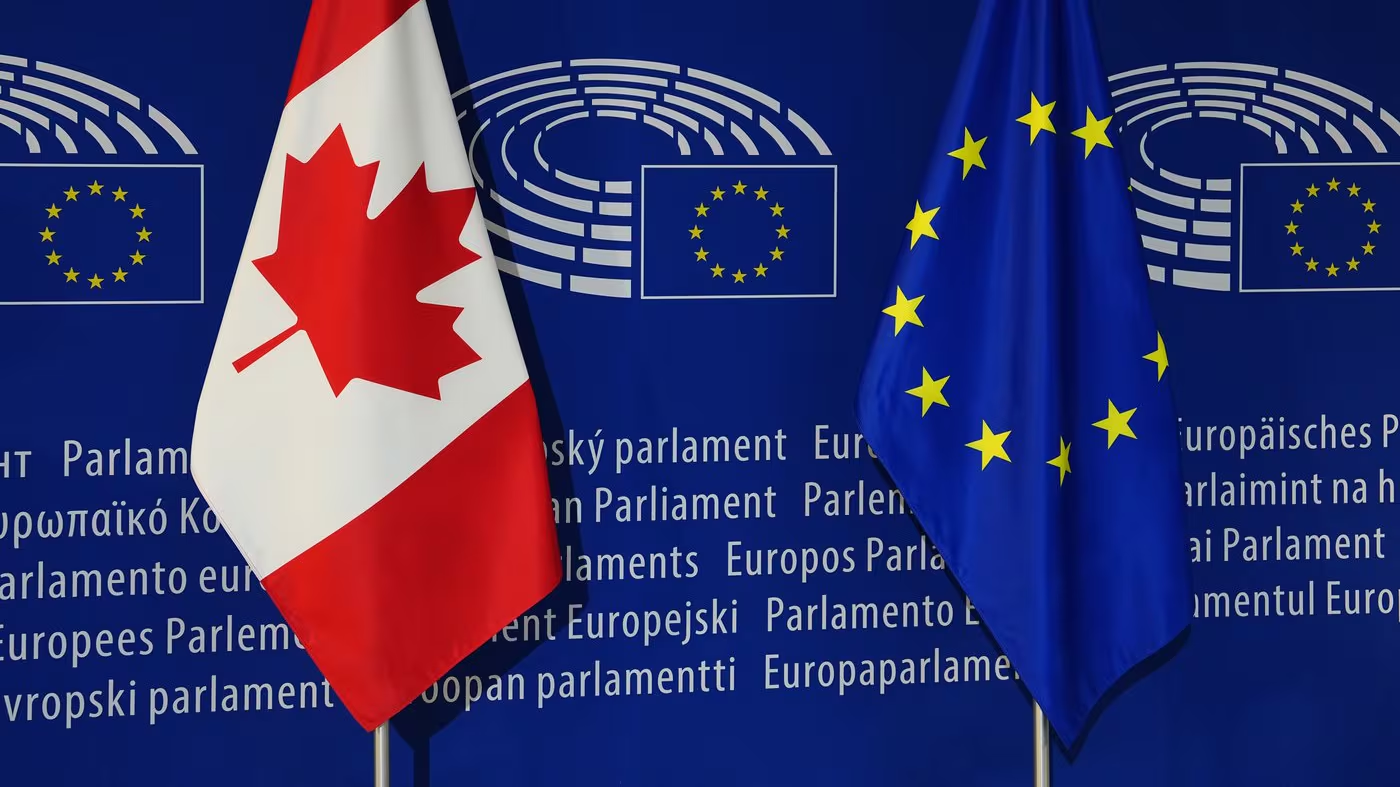
The political signals have been building through the fall. Prime Minister Mark Carney addressed the European Parliament in Strasbourg, France, on Sept. 17, 2026, a moment marked by the Canadian and EU flags displayed together. A summit on Canadian soil weeks later continues that high-level engagement.
General context: the EU has also pursued standalone digital trade arrangements with other partners in recent years, reflecting a wider trend among trading blocs to write separate rulebooks for digital commerce rather than waiting for global talks to catch up.
Why Data Flows and Digital Duties Matter Beyond Trade Negotiators
Terms like “electronic transmissions” and “data flows” can sound remote from everyday life. In practice, they shape what services Canadians can sell abroad and what European services are available at home.
- For small businesses: recognized e-signatures and e-contracts can reduce the need for paper originals, couriers and in-person sign-offs when closing a deal with a European client.
- For technology firms: clear rules on moving data across borders can lower the legal cost of serving European customers from Canada.
- For consumers: e-commerce provisions are generally designed to make online purchases across borders smoother, though the specific consumer protections in this deal have not been disclosed.
- For importers and exporters of goods: paperless trade can speed up customs processing by replacing printed documents with digital ones.
General context: since 1998, members of the World Trade Organization have generally agreed not to impose customs duties on electronic transmissions, under a moratorium that has been renewed periodically. Bilateral deals often seek to lock that kind of commitment in more firmly between the parties, which is one reason the duties question appears on the list.
Security is the other half of the data question. The word “secure” in Sidhu’s description reflects a broader concern among governments that moving data freely should not mean moving it carelessly, a theme that echoes recent warnings from Canadian officials about threats such as the PHP2Shell attacks that prompted Canada’s Cyber Centre to urge urgent patching.

What Remains Unsettled Before Leaders Meet in Montreal
Several questions remain open based on what has been said publicly so far:
- Final status: whether the agreement will be concluded, signed or simply advanced at the summit has not been confirmed.
- Privacy safeguards: how the data provisions interact with existing privacy laws on both sides has not been detailed.
- Ratification path: any approval steps required in Canada or within EU institutions have not been outlined.
- Timeline for effect: when businesses would actually feel the changes is not mentioned.
Those gaps are typical at this stage of a negotiation. Governments rarely release full texts until a deal is done, and early announcements often focus on the scope rather than the fine print.
What is clear is the direction of travel. Ottawa and Brussels are putting digital trade at the centre of their relationship, and the Montreal summit is the next point at which Canadians can expect more concrete information.
Frequently Asked Questions
Has the Canada-EU digital trade agreement been signed?
No. International Trade Minister Maninder Sidhu says the two sides are close to a deal, but it has not been finalized.
What would the agreement cover?
E-signatures and e-contracts, paperless trade, secure cross-border data flows, duties on electronic transmissions and e-commerce.
How much digital trade does Canada do with the EU?
Sidhu says Canada exported nearly $15 billion in digital services to the EU in 2024.
When will more details be announced?
Next steps in the partnership are expected at the Canada-EU Summit in Montreal next week; the exact date and content of any announcement have not been specified.


