


Best Buy is promoting its speaker range on everyday pricing and pickup convenience, but the listing leaves out the specific models, prices and deals that Canadian buyers need before they spend.
Best Buy speakers are being marketed on two promises: low everyday prices, and the choice between online ordering for delivery or in-store pickup. The retailer’s speaker category, highlighted in late October 2026 as the holiday shopping season approaches, offers few details beyond that, which leaves Canadian shoppers with real homework before they buy.
The pitch is simple, but what it leaves out is just as important. The listing reviewed for this story does not name specific models, list prices, describe limited-time discounts or set out promotion dates. Any of those figures shoppers see elsewhere should be checked directly with the retailer.
Best Buy Speakers Category Leans on Everyday Pricing and Pickup
The retailer frames its speaker range around convenience and value rather than any single product launch. The table below sets out what the listing states and what it leaves out.
| Detail | What the listing states |
|---|---|
| Product category | Speakers |
| Pricing message | Low everyday prices |
| Purchase options | Buy online for delivery, or buy online for in-store pickup |
| Specific models or brands | Not specified |
| Individual prices | Not specified |
| Sale or discount events | Not mentioned |
| Canadian availability | Not specified |
“Low everyday prices” signals a standing pricing approach rather than a dated sale. It is a familiar way for large electronics chains to position themselves, and it is no guarantee that any given speaker costs less than it does elsewhere.
Why a U.S. Storefront Listing Doesn’t Settle Canadian Prices
The speaker listing reviewed here comes from the company’s U.S. storefront. Canadian shoppers buy through Best Buy’s separate Canadian operation, so prices, stock, delivery coverage and pickup locations can all differ from what an American page shows.
Several factors typically separate the two markets, as general context:
- Currency: U.S. dollar prices do not convert neatly into Canadian shelf prices, which also reflect local costs and distribution.
- Product mix: Some models sold in one country are not offered in the other, or arrive later.
- Taxes and fees: Canadian purchases carry GST, HST or provincial sales tax, depending on the province, and some provinces add environmental handling fees on electronics.
- Cross-border orders: Ordering from a U.S. retailer for shipment to Canada can bring duties, brokerage charges and warranty complications.
For Canadian readers, the practical takeaway is to treat any U.S. listing as a rough guide to what kinds of products exist, not as a Canadian price list.
The Speaker Types Shoppers Are Likely to Encounter
The listing does not break its range into subcategories. As general context, though, a speaker section at a large electronics chain usually covers several distinct product types, each built for a different job:
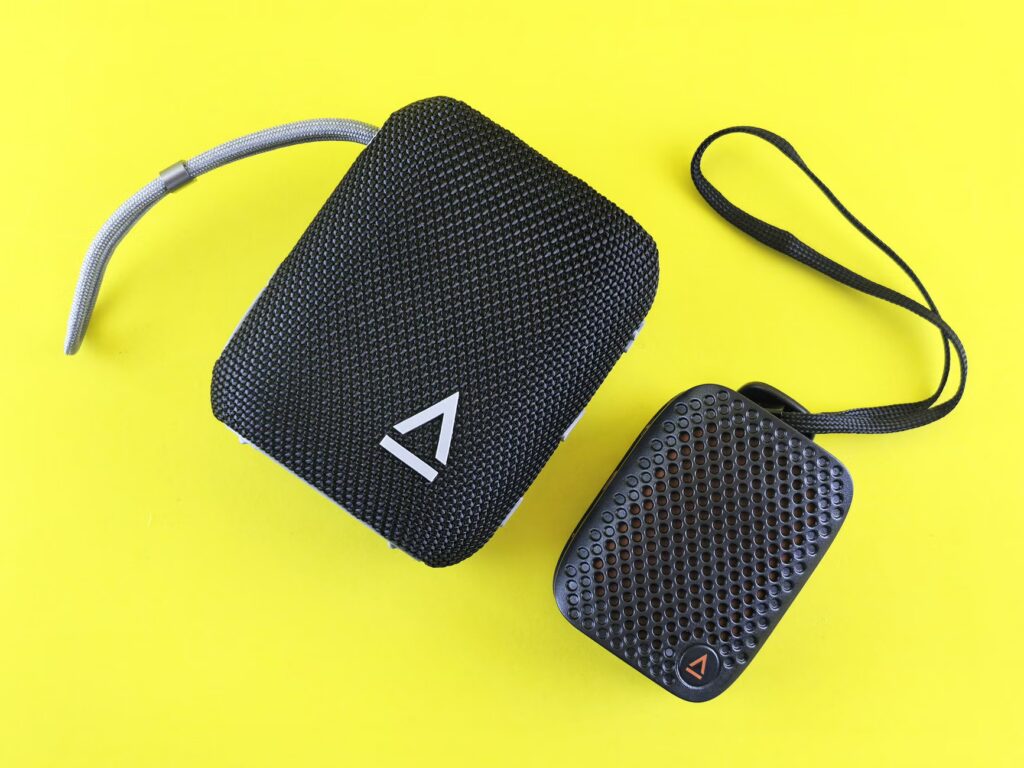
- Portable Bluetooth speakers: Battery-powered units for travel, patios and casual listening. Shoppers usually compare battery life, water resistance and size.
- Smart speakers: Wi-Fi models with built-in voice assistants that can also control connected home devices.
- Bookshelf and floor-standing speakers: Traditional home audio speakers that often need a separate amplifier or receiver.
- Soundbars: Slim units that sit under a television to improve dialogue and movie sound.
- Outdoor and party speakers: Larger, louder units built for yards, cottages and gatherings.
These categories are offered as a general guide to the market. They are not a description of the specific stock in this retailer’s listing.
Delivery Versus In-Store Pickup for Canadian Buyers
The listing’s emphasis on choosing between delivery and in-store pickup reflects a broader shift in how Canadians buy electronics. Online ordering with store collection, often called “click and collect,” grew quickly in recent years and is now standard at major chains.
Each option has trade-offs worth weighing, offered here as general guidance:
- In-store pickup: Often faster, avoids missed doorstep deliveries in winter, and lets buyers inspect the box before leaving. It depends on having a store within reasonable driving distance.
- Home delivery: More convenient for larger items such as floor-standing speakers. Shipping times to rural and northern communities can be longer, and delivery charges may apply.
- Returns: Policies can differ between online and in-store purchases and often tighten or relax around the holidays. Confirm the return window before buying.
Questions to Ask Before Buying Speakers This Season
With no specific prices or models in the listing, the burden falls on shoppers to compare carefully. A short checklist helps, whether the purchase is a gift or an upgrade for the living room:
- What will it be used for? A speaker for a camping trip and one for a home theatre are different purchases.
- How will it connect? Check compatibility with the phones, TVs and streaming services already in the home.
- Is the price really competitive? “Everyday” pricing is a marketing message. Compare the final after-tax price across several Canadian retailers.
- What does the warranty cover in Canada? Confirm that the manufacturer’s warranty is honoured here, especially on anything bought across the border.
- Is a sale coming? Late-October purchases come just before the November sales period. Buyers without a deadline may want to watch prices for a few weeks.
What the Speaker Aisle Says About Big-Box Electronics Retail
Beyond individual purchases, the way this category is pitched shows how large electronics chains compete. Leading with everyday pricing and flexible fulfilment, rather than headline discounts, suggests a strategy built on reliability and convenience. That matters at a time when shoppers can compare prices on their phones in seconds.
For Canadian brand builders and retailers, the lesson is familiar. Physical stores increasingly act as pickup points and showrooms that support online sales, rather than competing with them. Linking a website to local stock gives a retailer an edge that pure online sellers struggle to match, particularly for customers who want an item the same day.
For consumers, that competition is broadly good news. It pushes retailers to keep fulfilment options generous and prices visible, though it also means shoppers need to look past the marketing language to the actual numbers.
Note: No specific speaker prices, models or discounts were stated in the material reviewed. Readers should confirm current Canadian pricing and availability directly with the retailer before buying.
Frequently Asked Questions
Did the listing include specific speaker prices?
No. It promotes low everyday prices in general terms but does not list prices for individual products.
Are particular brands or models named?
No. The listing does not specify brands, models or featured products.
Do U.S. listings reflect what Canadians will pay?
Not necessarily. Best Buy runs a separate Canadian operation, so prices, stock and fees may differ from U.S. listings.
What purchase options does the retailer mention?
Shoppers can buy online and choose either delivery or in-store pickup.