


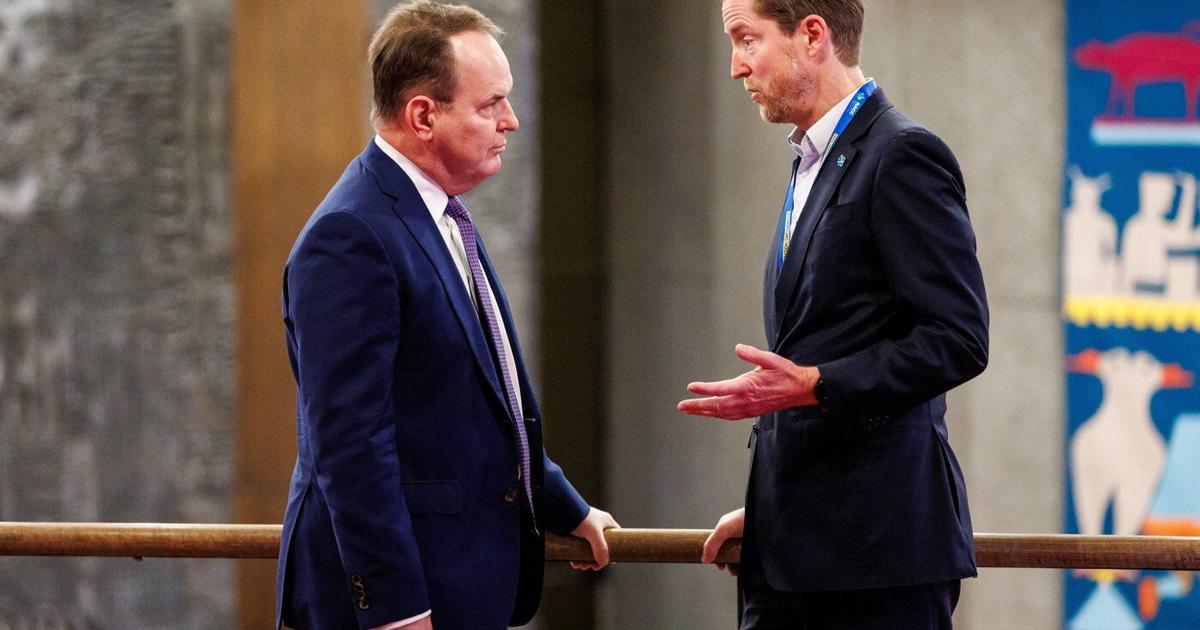
Transport Minister Steven MacKinnon promises 'fee moderation' in airport leases, but WestJet, Porter and Air Canada voices want firm limits written before any investor puts money on the table.
Ottawa’s plan for airport privatization at Canada’s four busiest hubs ran into pointed questions from the airline industry on Thursday, Oct. 8, 2026, as carriers warned that private operators could drive up the fees passengers ultimately pay. Transport Minister Steven MacKinnon responded at an aviation conference in Ottawa by promising that the lease contracts themselves will keep charges in check.
Executives from WestJet and Porter Airlines, along with a former Air Canada strategist, said the fee rules need to be settled before the government invites a single bid. What remains unclear is whether Ottawa will set uniform caps across all four airports or negotiate limits separately in each deal.
MacKinnon’s Promise of “Fee Moderation” Written Into Airport Leases
Speaking to reporters at the Aviation Day Canada conference, hosted by the International Air Transport Association (IATA) and the National Airlines Council of Canada (NACC), MacKinnon said the government intends to “regulate through contract.” The concessions handed to private operators, he said, will include what he described as price or fee moderation.
The minister did not spell out the mechanics. He left open whether landing fees and other airport charges will face across-the-board ceilings, or whether restrictions will be shaped deal by deal in a more flexible way. That distinction matters to airlines, which pay those charges and pass much of the cost to travellers.
MacKinnon also clarified the scope of what investors would be buying into. Rather than taking over pieces of an airport, such as a terminal or a parking operation, successful bidders would hold leases covering the full range of airport operations.
Carney’s Plan for Toronto, Montreal, Vancouver and Calgary
The policy traces back to an announcement by Prime Minister Mark Carney last month. He said he wants investors to take over operations at Canada’s four largest airports, in Toronto, Montreal, Vancouver and Calgary, and run them under long-term leases.
Under that model, the federal government would keep ownership of the airports and retain oversight. According to MacKinnon, the range of potential bidders is broad, from pension funds to First Nations.
General context: Canada’s major airports have for decades been run by not-for-profit local airport authorities that lease the land and facilities from the federal government. The new plan would shift operations at the four biggest hubs toward private investors seeking a return, which is the root of the airlines’ concern about fees.
Why WestJet’s CEO Calls an Airport a “Local Monopoly”
WestJet chief executive Alexis von Hoensbroech said in an interview at the conference that he has seen both the good and the bad of airport privatization. His central warning is structural: travellers and airlines usually have no practical alternative to the main airport in a city.
If governments simply privatize and let the market sort things out, he argued, the result is risky, because a private owner will aim to maximize returns from a facility that functions as a local monopoly. In that situation, he said, the temptation to raise passenger fees would be very strong.
He pointed to London’s Heathrow Airport and some Australian airports as examples where, in his view, privatization has gone in the wrong direction for users.
Austria’s “Dual Till” Model as a Possible Template
Von Hoensbroech, who led Austria’s largest airline before joining WestJet in 2021, offered the Austrian regulatory approach as a better example. Known as the “dual till” model, it divides an airport’s business into two separate parts.
- Aeronautical side: Landing fees, passenger terminals and related services. Fee increases here are tied only to the costs and capital investments on this side of the business, and a regulator must approve them before they take effect.
- Non-aeronautical side: Retail, hotels, parking and real estate development. Operators have far more freedom to set prices and pursue profits in these areas.
The effect, he said, is that European airports often resemble shopping centres rather than bus stations. Operators pour money into commercial spaces because that is where they earn most of their profit, while charges that land on airlines and passengers stay under regulatory control.
Porter and Former Air Canada Strategist Want Rules Before Tenders
Other industry voices at the conference focused less on which model Ottawa picks and more on timing. Porter Airlines president Kevin Jackson put it plainly: the regulation needs to be decided before any tenders go out.
Christopher Read, a former director of corporate development at Air Canada, said a rules-first, bids-second sequence is essential for airlines trying to plan strategically. Carriers need more detail to map out their businesses, he said, adding that the real risks lie in the specifics of how contracts are structured.
The concern is practical. Airlines make fleet, route and pricing decisions years in advance. If the fee framework is negotiated only after investors are chosen, carriers could find themselves locked into commitments at airports whose costs later rise.
Musqueam Talks and the Open Question of Which Airport Goes First
MacKinnon confirmed that the government has held conversations with potential stakeholders. However, he said no decision has been made on which of the four airports will be the first to move to a private investment model.
The minister did not dispute a recent media report that Ottawa is in discussions with the Musqueam First Nation about privatizing Vancouver International Airport. He acknowledged that there have been thorough discussions, noting that the government is in constant contact with relevant First Nations on major projects, reconciliation more broadly and this initiative.
No timeline for issuing tenders, selecting operators or transferring operations was given.
Australia’s Airport Privatization Record: Investment Gains and an 81 Per Cent Fee Jump
Ottawa has frequently cited Australia as a reference point. That country handed control of its airports to private investors between 1997 and 2003, and the results have been mixed.
| Outcome | What the Australian experience showed |
|---|---|
| Capital investment | Billions of dollars invested after privatization |
| Passenger experience | Faster baggage handling and check-in, plus more lounges |
| Airline fees | The four biggest airports raised airline fees by $1.6 billion, or 81 per cent, in the decade leading up to 2015, according to Australia’s competition watchdog |
| Who paid | Many of those costs would have been passed on to travellers |
That split is exactly the trade-off at the heart of the Canadian debate. Supporters point to new investment and better facilities, while airlines point to the bill that can follow when operators face little competitive pressure.
What Travellers Already Pay in One of the World’s Costliest Aviation Markets
Airline leaders stressed that the debate is not starting from a low base. Peter Cerdá, IATA’s regional vice-president for the Americas, described Canada as one of the most expensive aviation markets in the world because of its fees and taxes.
Arielle Meloul-Wechsler, an executive vice-president at Air Canada who heads its human resources, said about a third of the cost of a domestic ticket never reaches the airline. That portion goes to the various fees and charges layered onto fares.
For travellers, the stakes are straightforward. If privatized operators raise aeronautical charges without firm limits, airlines say those costs are likely to show up in ticket prices on top of an already heavy load.
Why the Fee Fight Matters Beyond the Airlines
The exchange in Ottawa sets out the main fault line in the airport privatization debate. The government is betting that long-term leases can attract major investment from pension funds, First Nations and other investors while contract terms protect passengers. Airlines are not opposing the plan outright, but they want those protections defined, tested and public before bidding starts.
Several issues will shape how this plays out for readers following the file:
- Uniform or tailored limits: Whether fee caps apply equally to all four airports or are negotiated in each lease.
- Regulatory design: Whether Ottawa adopts something like Austria’s dual till, separating regulated aeronautical charges from commercial revenue.
- Sequencing: Whether fee rules are finalized before tenders, as airlines are demanding.
- First mover: Which airport transitions first, with Vancouver and the Musqueam First Nation already part of the discussion.
Until Ottawa publishes the contract framework, the promise of fee moderation remains a commitment rather than a set of rules that airlines and passengers can measure.
Frequently Asked Questions
Which airports are included in Ottawa’s privatization plan?
The plan covers Canada’s four largest airports: Toronto, Montreal, Vancouver and Calgary.
Will the federal government still own the airports?
Yes. Ownership and oversight would remain with Ottawa, while private investors would run operations under long-term leases.
Who could bid to operate the airports?
MacKinnon said potential bidders range from pension funds to First Nations.
Will airport fees be capped?
MacKinnon said leases will include fee moderation, but it is not yet clear whether there will be uniform caps or deal-by-deal limits.
Which airport will be privatized first?
Not decided. The minister said no choice has been made, though talks with the Musqueam First Nation about Vancouver have been reported.