


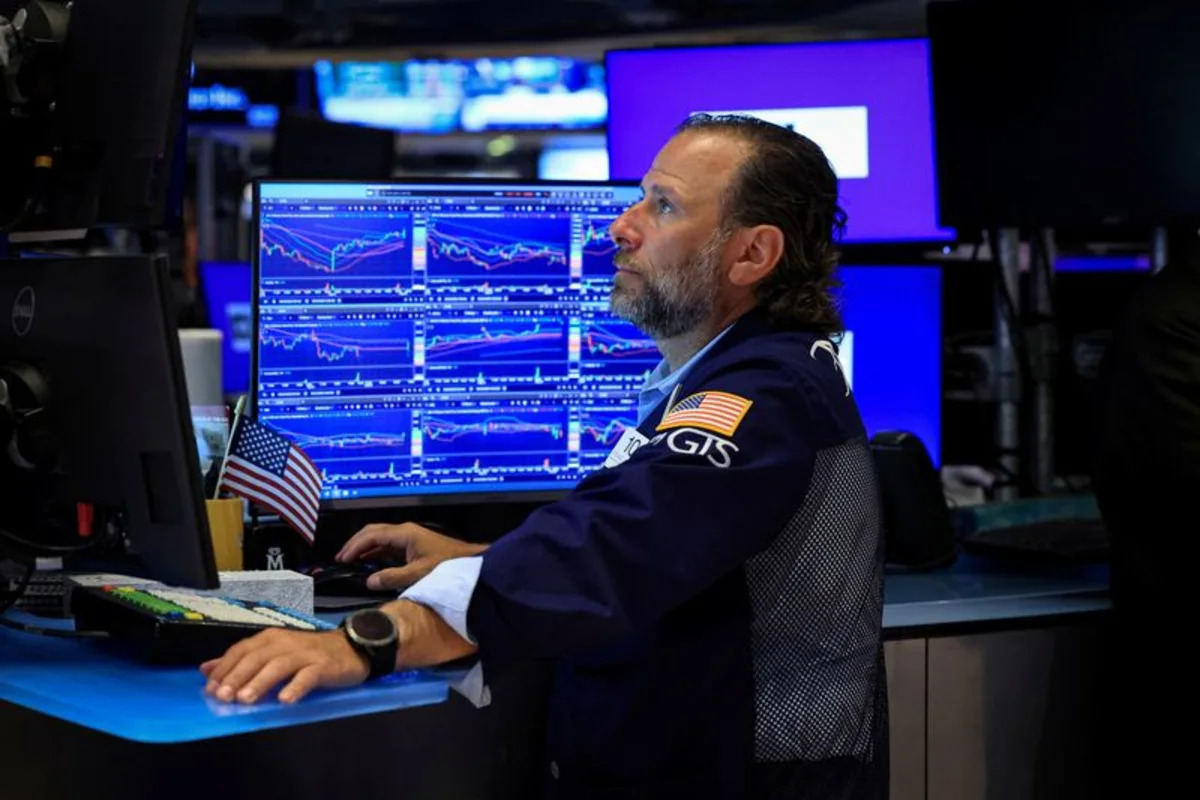
A plain-English breakdown of why Treasury yields jumped after Jackson Hole, how far the shock has spread, and which data points could shift the Fed's next move.
Warsh’s Jackson Hole Message Reprices Global Debt
Global bond markets opened September under renewed strain after Federal Reserve Chair Kevin Warsh used the annual Jackson Hole Economic Symposium on August 30 to deliver a firmly hawkish message on inflation. His remarks pushed U.S. Treasury yields to their highest levels since President Donald Trump took office in January 2025.
Warsh said the Federal Reserve still has work to do if inflation does not return to its 2 percent target, and indicated that current interest rate settings have not sufficiently restricted economic activity. Traders read that as a clear signal that the tightening cycle is not finished.
Futures markets now price roughly a two-thirds probability of another rate increase at the Fed’s September meeting. That repricing rippled quickly through sovereign debt, currency, and equity markets across Asia, Europe, and North America.
Why Treasury Yields Matter Beyond Wall Street
The 10-year Treasury yield rose sharply after Warsh’s remarks. It is the reference rate that sits underneath a large share of household and corporate borrowing in the United States, including mortgages, auto loans, and business credit.
When that benchmark climbs, lenders generally pass the higher cost of money along. Home financing becomes more expensive, refinancing becomes less attractive, and companies weighing expansion face a steeper hurdle rate on new projects.
Bond prices and yields move in opposite directions. That mechanical relationship is why a hawkish speech can simultaneously raise future borrowing costs and reduce the market value of bonds investors already hold.
Market Signals at a Glance
The table below summarizes the specific market moves reported around the September 1 session and why each one matters to readers watching the broader picture.
| Indicator | Reported move | Why it matters |
|---|---|---|
| U.S. Treasury yields | Highest levels since January 2025 | Sets the baseline for mortgages, auto loans, and corporate borrowing |
| September Fed rate hike odds | Roughly two-thirds probability priced by futures markets | Reflects how strongly investors took Warsh’s inflation warning |
| Japan 10-year government bond yield | Reached 3 percent on September 1, first time since 1996 | Shows the bond selloff is global, not confined to the U.S. |
| U.S. dollar | Strengthened against major currencies, with the yen under pressure | Shifts trade competitiveness and capital flows worldwide |
| Hong Kong Hang Seng | Closed 1 percent lower on September 1 | Signals equity caution as rate expectations rise |
| Crude oil | Continued climbing after renewed military exchanges in the Iran conflict | Adds a fresh input to consumer price pressures |
A Synchronized Tightening Cycle Takes Shape
Japan’s 10-year government bond yield reaching 3 percent on September 1 for the first time since 1996 underlined how far the pressure has spread. Both the Bank of Japan and the European Central Bank are widely expected to raise rates this month.
Analysts describe the combination as a synchronized tightening cycle across major economies. When several large central banks move in the same direction at the same time, the cumulative drag on global demand can be larger than any single decision suggests.
Emerging markets and developing economies that depend on capital inflows are especially exposed. Higher yields in advanced economies tend to redirect investment toward those markets, tightening financial conditions elsewhere by default.
Energy Prices Complicate the Inflation Picture
The timing of Warsh’s speech coincided with additional inflationary pressure from the energy complex. Crude oil prices continued climbing following renewed military exchanges in the Iran conflict.
Energy costs feed into transportation, manufacturing, and food prices with a lag, which is why central bankers watch them closely even when they focus publicly on core inflation. Rising oil reinforces the argument that policy should stay restrictive for longer.
Currency Markets Absorb the Shock
The dollar strengthened significantly against major currencies after Warsh’s remarks, with the Japanese yen under particular pressure. A stronger greenback makes Japanese exports more expensive for foreign buyers, complicating the outlook for an economy already navigating difficult trade dynamics.
Currency analysts note that yen weakness has amplified calls for the Bank of Japan to follow up its summer currency market interventions with a rate increase this month. Intervention alone rarely holds a currency for long if the underlying interest rate gap keeps widening.
As U.S. rates rise, capital tends to flow toward dollar-denominated assets. That creates spillover effects for trading partners and for economies that rely on stable exchange rates to manage import costs and external debt.
European Bond Markets Face Fiscal and Political Headwinds
European bond markets carry their own set of pressures heading into autumn. Governments across the region are navigating fiscal constraints at the same time central banks signal continued rate increases.
Higher borrowing costs paired with potential fiscal tightening leave less room for maneuver on both sides of the policy ledger. That combination has created uncertainty for European investors and businesses.
Electoral calendars in several major European economies add another layer of complexity. Policymakers must balance fiscal discipline against political pressure, an environment in which bond market volatility can persist.
Equities Turn Cautious as Rate Expectations Rise
Asian shares traded mixed on September 1, with Hong Kong’s Hang Seng closing 1 percent lower. Part of the decline came from a sharp drop in shares of Shein, the fast-fashion retailer that completed its market debut this week.
The company’s lackluster initial public offering performance reflects broader investor caution as markets digest sustained higher interest rates. U.S. stock futures pointed lower ahead of the opening bell, suggesting American equities could face headwinds of their own.
Several major technology companies are scheduled to report earnings this week. Chip giant Broadcom’s results on Wednesday are drawing particular attention; with a market capitalization exceeding $1.7 trillion, Broadcom ranks as the seventh most valuable stock on Wall Street.
The Data and Events Investors Are Watching
Several releases could shape how the Federal Reserve frames its September decision.
- U.S. July JOLTS job openings: scheduled for September 2 at 10 a.m. EDT, offering a read on labor demand.
- August ISM manufacturing PMI: also due September 2 at 10 a.m. EDT, covering factory activity and price pressures.
- Federal Reserve Governor Michael Barr: scheduled to speak this week, potentially adding clarity on the inflation outlook.
- G20 finance ministers: concluding their meeting in Asheville, North Carolina, where international policy coordination has featured prominently amid heightened volatility.
- Broadcom earnings: reporting Wednesday, a bellwether for how higher rates are affecting large-cap technology valuations.
What Higher Yields Mean for Households and Businesses
The move in Treasury yields carries direct consequences for North American borrowers and savers. Mortgage rates typically track Treasury yields with a lag and are likely to move higher in coming weeks if bond market conditions remain stressed.
For savers, rising yields improve returns on newly issued bonds, savings accounts, and money market funds. Existing bondholders face the opposite effect, since older bonds with lower coupons lose value relative to new issuance.
Businesses planning capital expenditure or debt refinancing face higher costs of capital. Companies carrying floating-rate debt or facing near-term maturities are the most sensitive, and further increases could weigh on investment and hiring plans.
How Markets Typically Read Central Bank Language
Central bank communication is a policy tool in its own right. Officials rarely commit to a specific action, so investors parse qualifiers, verb choices, and the emphasis placed on inflation versus employment to infer direction.
A phrase such as “still has work to do” signals that policymakers see the current stance as insufficient. Futures markets translate that language into probabilities, which is how a speech can move borrowing costs before any rate decision is actually made.
This general framework applies across central banks and is not specific to any single institution or official. It helps explain why a single address at a symposium can reprice assets across continents within hours.
The Broader Economic Context
The Federal Reserve’s hawkish posture reflects persistent concern about inflation despite months of tightening. Consumer prices have moderated from their 2022 peaks but remain above the 2 percent target, which keeps a restrictive stance on the table.
The interconnected structure of modern financial markets means a policy shift in one economy travels quickly across borders through bond yields, currencies, and capital flows. Investors and policymakers are now watching whether coordinated increases can bring inflation down without triggering a broader slowdown.
What Happens Next
The immediate focus falls on the September 2 data releases and any additional guidance from Federal Reserve speakers. Markets will then turn to the Fed’s September meeting, alongside expected decisions from the Bank of Japan and the European Central Bank.
If incoming labor and manufacturing data come in weaker than expected, rate-hike odds could recede and yields may stabilize. Firmer data would reinforce the hawkish reading and keep upward pressure on global borrowing costs.
Editorial Note and Disclaimer
This article reports on publicly discussed market developments and official commentary as described in the available reporting. Figures cited reflect the levels and expectations reported at the time of publication and can change quickly.
Nothing here constitutes investment, tax, or financial advice, and no forecast is offered. Readers making financial decisions should consult a qualified professional and verify current rates and data directly with primary sources. Details not addressed in the source material are marked Not specified.
Frequently Asked Questions
Why did Kevin Warsh’s Jackson Hole speech move markets? Warsh said the Federal Reserve still has work to do if inflation does not return to its 2 percent target and indicated current rates are not sufficiently restricting activity. That hawkish framing lifted expectations for a September increase and pushed Treasury yields higher.
How high did Treasury yields go? Yields climbed to their highest levels since January 2025. A precise closing level for each maturity is Not specified in the available reporting.
How does the 10-year Treasury yield affect mortgage rates? The 10-year yield is the main benchmark for mortgage pricing. When it rises, lenders typically raise mortgage rates, making home purchases more expensive and refinancing less attractive.
What does a two-thirds probability of a rate hike mean? Futures markets are pricing roughly 67 percent odds that the Federal Reserve raises rates at its next meeting. It is a market-implied expectation, not a decision or a guarantee.
Why is Japan’s 10-year yield reaching 3 percent significant? Japan’s 10-year government bond yield hit 3 percent on September 1 for the first time since 1996. That milestone showed the bond selloff is a global phenomenon rather than a purely U.S. story.
What does a stronger dollar mean for trade? A stronger dollar makes American exports more expensive abroad while making imports cheaper for U.S. buyers. It also puts pressure on currencies such as the yen and can redirect capital toward dollar assets.
Why did the Hang Seng fall on September 1? The index closed 1 percent lower, with part of the move attributed to a sharp drop in Shein shares following the retailer’s market debut. Broader caution about higher interest rates also weighed on sentiment.
Which data releases could change the Fed’s thinking? The U.S. July JOLTS job openings report and the August ISM manufacturing PMI are both scheduled for September 2 at 10 a.m. EDT. Softer readings could ease hike expectations, while strong data would support the hawkish view.
Are other central banks expected to raise rates too? The Bank of Japan and the European Central Bank are both widely expected to raise rates this month, which analysts describe as a synchronized tightening cycle across major economies.