


How 26,000 mailed postcards, a $180,000 price tag and a five per cent response rate are being folded into Ottawa's under-16 platform bill.
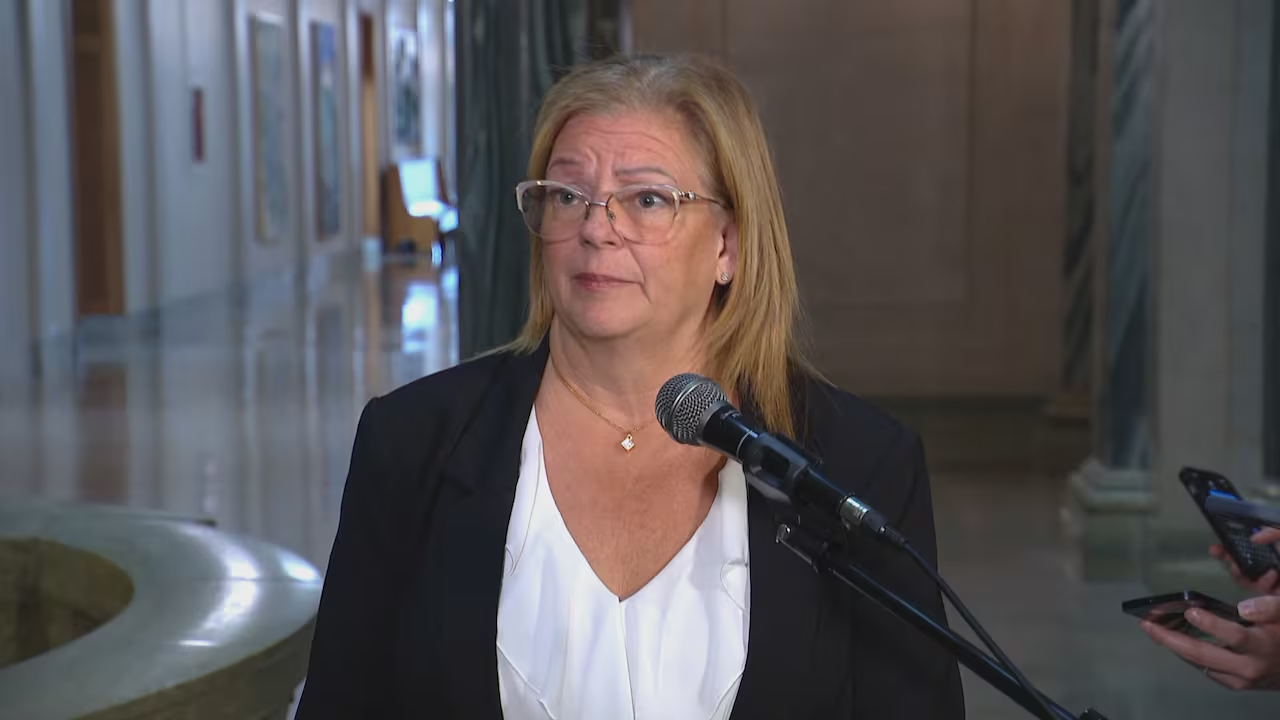
Support for youth social media limits ran overwhelmingly high in a Saskatchewan government mail-in survey, with 86.34 per cent of more than 26,000 respondents saying they want restrictions on social media use for people younger than 16. Mental Health and Addictions Minister Lori Carr released the results to reporters at the legislature in Regina on Thursday, September 3, 2026, and said the province will hand them to Ottawa as the federal government works through its own under-16 legislation.
The timing is deliberate. The federal government introduced a bill in June that would bar people under 16 from holding social media accounts unless platforms can demonstrate they have put sufficient protections in place for young users. Saskatchewan’s postcard exercise gives one province a set of numbers to bring to that table.
What the 26,000 Postcards Actually Said
The survey was distributed by mail as a postcard, and roughly five per cent of the households that received one sent it back. That produced more than 26,000 responses — a large raw sample, though a low return rate that is worth keeping in view when reading the percentages.
Fewer than 14 per cent of respondents opposed limits outright. Even within that minority, 68 per cent said they would support a parental consent requirement, meaning near-total opposition to any form of guardrail was a small slice of the returned cards.
- Support for restrictions: 86.34 per cent of respondents backed limits on social media for people under 16.
- The cutoff age: Nearly 58 per cent named 16 as the appropriate age threshold.
- Opposed, with conditions: Of the under-14 per cent who said no to limits, 68 per cent still favoured parental consent.
- Cost: The province spent about $180,000 on the survey.
“I think it’s important for the federal government to know what Saskatchewan families think and so they will take that into consideration,” Carr told reporters.
Why YouTube Led the List of Platforms to Exempt
Respondents were also asked which platforms should be carved out of any future rules, and the answers were not evenly spread. Thirty-one per cent named YouTube as the top candidate for an exemption — nearly double the share given to any single competitor.
Instagram, Snapchat, Facebook and TikTok each drew roughly 17 per cent. In practical terms, the public appears to draw a line between platforms it reads as social networks and one it reads as a video library, even though all five run recommendation systems designed to extend viewing time.
| Platform named for exemption | Share of respondents |
|---|---|
| YouTube | 31% |
| ~17% | |
| Snapchat | ~17% |
| ~17% | |
| TikTok | ~17% |
Youth Matter Canada Pushes Back on the YouTube Carve-Out
Laura Lawrence, executive director of Youth Matter Canada, a non-profit that advocates for youth mental health, said the survey findings line up with what her organization has been hearing in the province. But she rejected the assumption embedded in the exemption numbers.
“I’ll just tell you that the youth share with us that YouTube is one of the problems because of its addictive algorithms, the interface, the non-stop play,” Lawrence said, adding that young children are exposed to harmful content there as well.
Her organization has spent the past two years connecting with young people in Saskatchewan online. From that engagement, 91 per cent of youth aged 12 to 18 reported that social media platforms expose them to harmful content, and 85 per cent said that exposure affects their mental health.
The AI Chatbot Blind Spot in the Youth Social Media Limits Debate
Lawrence’s sharpest warning was about what the conversation leaves out. She said discussion of platform age limits repeatedly fails to account for artificial intelligence chatbots, which sit outside most people’s mental picture of “social media” but are now widely used by children.
“What we’re hearing from youth and parents is that AI chatbots pose a real risk and threat to kids, especially younger kids, whose prefrontal cortex are still not fully developed,” she said.
Ottawa’s draft regulations do reach in that direction: AI chatbot services would have to demonstrate they are mitigating the risks their products pose. The gap Lawrence describes is less about legislative text than public awareness — a mismatch between what parents think they are regulating and what their children are actually using. It echoes a broader Canadian governance problem, one that industry association TECHNATION has flagged in warning that AI agents are outrunning the country’s oversight frameworks.
A Prince Albert Parent and a Swift Current Teen on Living With the Rules
Cassandra Sarrazin, a Prince Albert mother of two, said she supports restrictions based on what she watched happen in her own home. She is taking a stricter approach with her four-year-old than she did with her eight-year-old.
“Even for myself, our first kid we didn’t restrict it as much until I started to see studies of YouTube and the pixels per second, how it actually stimulates certain parts of the brain and it can be very addictive,” said Sarrazin, who was visiting Kinsmen Park in Saskatoon. “And so we noticed behavioral-wise, especially with our first one, once we restricted it, you get your kid back again.” She expects effective legislation could take a year or two to draft.
Students carry a more divided view. Draesyn Mielke, 16, one of several high school students in Swift Current who described mixed feelings, said restricting social media makes sense for younger children and pointed to his own bad experiences on the apps: “And I’ve learned to just, like, never trust anybody unless you know them personally.”
How the Federal Bill Would Work
The legislation introduced in June does not simply set an age gate. It proposes to prohibit under-16 accounts unless a platform can show it has introduced sufficient protections for youth — placing the burden of proof on the companies rather than on families or regulators.
That structure creates an obvious commercial incentive: platforms that can document credible safety systems retain a user segment their competitors lose. It also creates an enforcement question, since age assurance at scale remains technically contested, and teenagers have consistently told reporters they expect to find workarounds.
For Canadian media and technology businesses, the bill lands in an already active regulatory season. Ottawa’s willingness to legislate platform behaviour has been visible elsewhere, including the CRTC’s decision to press ahead with Canadian content streaming rules that the United States fought during trade talks. Age limits, content rules and AI oversight are increasingly being handled as one policy conversation about who answers for what appears on a screen.
Carr’s Next Move: A Meeting With Marc Miller
Carr said she plans to meet with federal Minister of Canadian Identity and Culture Marc Miller to walk through the Saskatchewan results. No date for that meeting was given, and the province has not announced provincial legislation of its own — its stated role at this stage is to feed public opinion into the federal drafting process.
What Saskatchewan has produced is a snapshot of sentiment rather than a mandate: a strong majority of a self-selected five per cent of households, agreeing on the principle of youth social media limits and on 16 as the number, while disagreeing with youth advocates about which platforms deserve a pass.

Frequently Asked Questions
Would the federal bill ban all social media for under-16s?
No. As introduced in June, it would prohibit under-16 accounts unless platforms can demonstrate they have put sufficient youth protections in place.
Does the proposed law cover AI chatbots?
Yes. Under the proposed regulations, AI chatbot services would need to prove they are mitigating the risks of their services.
How representative is the Saskatchewan survey?
About five per cent of households that received a postcard responded, producing more than 26,000 returns. It was a voluntary mail-in survey, not a randomized poll, so the results reflect those who chose to reply.
Is Saskatchewan writing its own social media law?
Not mentioned. The province said it is passing the survey results to the federal government, which is developing the legislation.


