


A breakdown of the online safety, skilled trades, permitting and trade commitments the Prime Minister put in front of his caucus — and the fiscal bet underneath them.
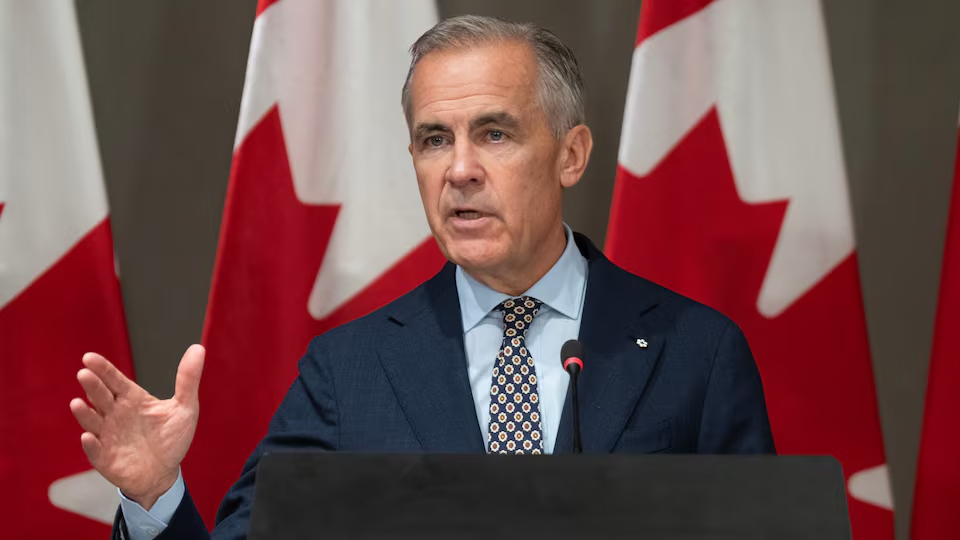
Prime Minister Mark Carney used a Friday caucus address in Ottawa to frame the Carney fall parliamentary sitting as a legislative turning point, telling Liberal MPs and senators his government will bring forward the most “consequential” legislation in decades. Speaking on 18 September 2026 to a room that repeatedly broke into applause, he described “a new, powerful, confident and united Canada” and set out a package that runs from online safety rules to skilled trades subsidies and a broader export push.
The speech landed at the end of a crowded week for the Prime Minister: a meeting with Ukrainian President Volodymyr Zelenskyy, a two-day investment summit in Toronto, and the promise of a deal to draw Canada closer to the European Union. “In the midst of a rupture we have to move forward,” Carney told the caucus — a line that doubled as his justification for both the pace and the price of what he is proposing.
Social Media Safety and AI Rules Move to the Front of the Queue
The clearest legislative commitment was on digital safety. Carney promised to push forward legislation on social media safety and argued that Canada is positioned to lead the world on digital safeguards, including rules touching artificial intelligence.
No bill number, text, tabling date or enforcement model was disclosed in the address, so the scope remains open: the government has not spelled out which platforms would be captured, what duties they would carry, or which regulator would oversee them. For Canadian firms, the practical question is whether a safety statute lands as a standalone platform-accountability bill or as part of a wider AI governance framework.
Digital policy has been a recurring theme for this government. Readers following that thread will recall the launch of Digital Transformation Canada under Prime Minister Carney, and the parallel movement on the private-sector side, where vendors have been tightening their own AI safeguards ahead of regulation. A domestic safety statute would begin to convert those voluntary practices into legal obligations.
‘A Generation’ of New Tradespeople and the Subsidy Promise
Carney also committed to movement on subsidies for young Canadians entering the skilled trades, tying the measure directly to his build-out agenda. As he put it in the session, “building Canada strong will require a generation” or more of new tradespeople.
The design details that employers, colleges and unions will care about — the value of the subsidy, who administers it, which trades qualify, and whether it flows to apprentices, employers or training institutions — were not set out. What the announcement does confirm is the government’s reading of the bottleneck: labour supply, not just capital, is being treated as the binding constraint on major projects.
‘One Project, One Review, One Year’ on Approvals
On permitting, Carney repeated the mantra “one project, one review, one year,” restating a plan to compress approval timelines for large projects. The phrase points to a single coordinated review process rather than sequential federal and provincial assessments, though the mechanics were not detailed in the caucus remarks.
He paired that with a claim on investment competitiveness, telling the room that Canada’s effective tax rate on new investment “will be the lowest of any major economy in the world.” That assertion is the government’s own framing and was not accompanied by a published comparison table in the address.
Why Ottawa Suspended Trade Negotiations With Washington
The sharpest section of the speech dealt with the United States. Carney defended the collapse of formal trade talks as a deliberate act of self-protection: “Last month, we made the right decision to suspend our negotiations with the United States. They asked too much. We wouldn’t give it.”
The timeline behind that line matters. Formal negotiations ended abruptly on 21 August 2026, days after U.S. President Donald Trump suggested the two sides had the framework of a deal. Carney pulled the plug at the eleventh hour, accusing the American side of introducing last-minute demands. Both capitals blame the other for the impasse.
He said Canada will return to the table “in good faith” once the Americans are ready to reach an agreement that “respects our sovereignty.” Canada-U.S. Trade Minister Dominic LeBlanc said last week that informal talks are continuing, which leaves the relationship in an unusual holding pattern: no formal process, but no complete silence either.
The Diversification Play: EU Partnership and Industrial Exports
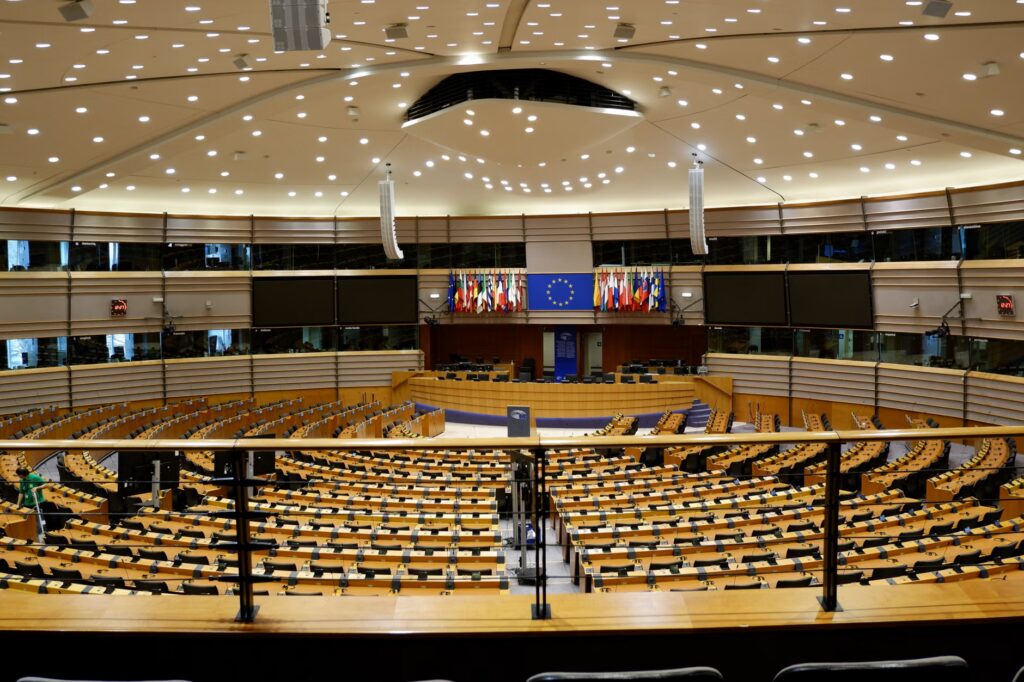
Running alongside the U.S. stalemate is an explicit diversification strategy. Carney promised to expand trade across a series of industrial export sectors and has been building out a closer partnership with the European Union, having earlier outlined that vision in the European Parliament. He has said the EU partnership will go to debate and a vote in Parliament, which makes it one of the concrete items the fall sitting will have to handle.
Taken together with the Toronto investment summit and the growing stack of trade agreements Canada has signed with countries around the world, the message to business is that Ottawa is treating market diversification as structural rather than temporary.
The Fiscal Bet: What Carney Is Asking Canadians to Absorb
CTV News political commentator Scott Reid, a former communications director to Liberal prime minister Paul Martin, framed the agenda as a wager that Canadians will follow the Prime Minister through a run of “head-spinning” financial and political decisions. “He’s asking a lot of the country,” Reid said.
Reid pointed to three commitments in particular that will shape the deficit picture:
| Item | Reported figure | Source of figure |
| Increase in defence spending | Estimated $150 billion per year | Estimate cited in commentary |
| “Mega” business deduction (100% of various asset costs) | Projected $36 billion over five years | Analysis from TD |
| Effective tax rate on new investment | “Lowest of any major economy in the world” | Carney’s own statement; no comparison published |
| Canada-EU partnership | To be debated and voted in Parliament | Carney |
Reid’s assessment was that these initiatives are likely to produce large deficits, and that Canadians may tolerate them “if they believe they are necessary in order to move through this moment and take on Trump.” The defence figure is an estimate rather than a confirmed budget line, and readers should treat it as such until costing documents are published. The scale of that military build-out is also playing out on the alliance stage, where Canada recently saw its top general fall short in a NATO Military Committee vote.
What Business Readers Should Watch in the Sitting
For executives, investors and brand builders, the address maps out a short list of items with real commercial consequences. None of the following have published dates attached, and the government did not release draft text with the speech:
- Platform and AI compliance costs: a social media safety bill would set new duties for any business operating a large user-facing platform in Canada.
- Apprenticeship economics: trades subsidies could shift the cost of training for construction, manufacturing and energy employers.
- Project timelines: a single one-year review standard, if legislated, changes the financing assumptions on large capital projects.
- Capital allowances: the 100 per cent asset deduction is already material to purchasing and depreciation planning.
- Export routing: expanded industrial trade and an EU framework affect where Canadian exporters look first for growth.
A separate line of reporting attributed to unnamed sources indicated that the federal government also intends to introduce new labour legislation. That has not been confirmed on the record, and no details were provided.
Against a backdrop of tariff uncertainty and shifting inflation expectations, the fiscal choices described above will be read alongside domestic cost pressures; our explainer on how the CPI inflation calculator reflects price changes for Canadian readers offers useful grounding for that conversation.
Frequently Asked Questions
When does the fall sitting of Parliament begin?
The specific resumption date was not stated in the Prime Minister’s remarks. Not specified.
Has the social media safety bill been tabled?
No. Carney promised to push the legislation forward, but no bill text, number or tabling date was released with the address.
Are Canada-U.S. trade negotiations over?
Formal negotiations were suspended on 21 August 2026. Trade Minister Dominic LeBlanc has said informal talks continue, and Carney says Canada will return “in good faith” when Washington is ready for a deal that respects Canadian sovereignty.
How much will the skilled trades subsidy be worth?
The value, eligibility rules and delivery mechanism were not disclosed. Not mentioned.
Will the Canada-EU partnership need Parliament’s approval?
Carney has said the partnership will go to debate and a vote in Parliament, making it one of the items expected to come before MPs.