


What Ottawa and Brussels are actually preparing to announce, why they are framing it as a counterweight to Washington and Beijing, and which pieces remain unwritten.
A far-reaching EU-Canada alliance spanning trade and security is being prepared for its public debut in Strasbourg, according to reporting published on September 8, 2026. The European Commission president is expected to sketch out the plan in her State of the Union address on September 16, and Canada’s prime minister is expected to be in the chamber for it before addressing European lawmakers the following day.
The framing on both sides is explicitly geopolitical. Officials describe the emerging relationship as a counterweight to a world order increasingly shaped by power politics between the United States and China, rather than as a routine upgrade to an existing trade file. Canadian officials, per the reporting, describe an appetite for essentially everything short of European Union membership.
“Everything Short of EU Membership”: How Ottawa Is Describing Its Ask
That phrase is the single most revealing detail in the story, because it sets an unusually high ceiling. Canada is not a candidate country, is not in the European Economic Area, and has never sought accession. What Ottawa appears to be proposing instead is deep, sector-by-sector integration with the EU’s institutions and programmes without the constitutional commitments membership would require.
The three areas named are defence, space and research cooperation. Each is a domain where the EU has been building its own instruments and budgets over the past several years, and each is an area where a non-member state’s level of access is a matter of negotiated agreement rather than automatic entitlement.
Notably, the reporting positions the package as covering both trade and security together. For a country whose external economic policy has been dominated by managing its relationship with Washington, treating Brussels as a strategic partner of comparable weight is itself the news.
Why September 16 and 17 in Strasbourg Matter
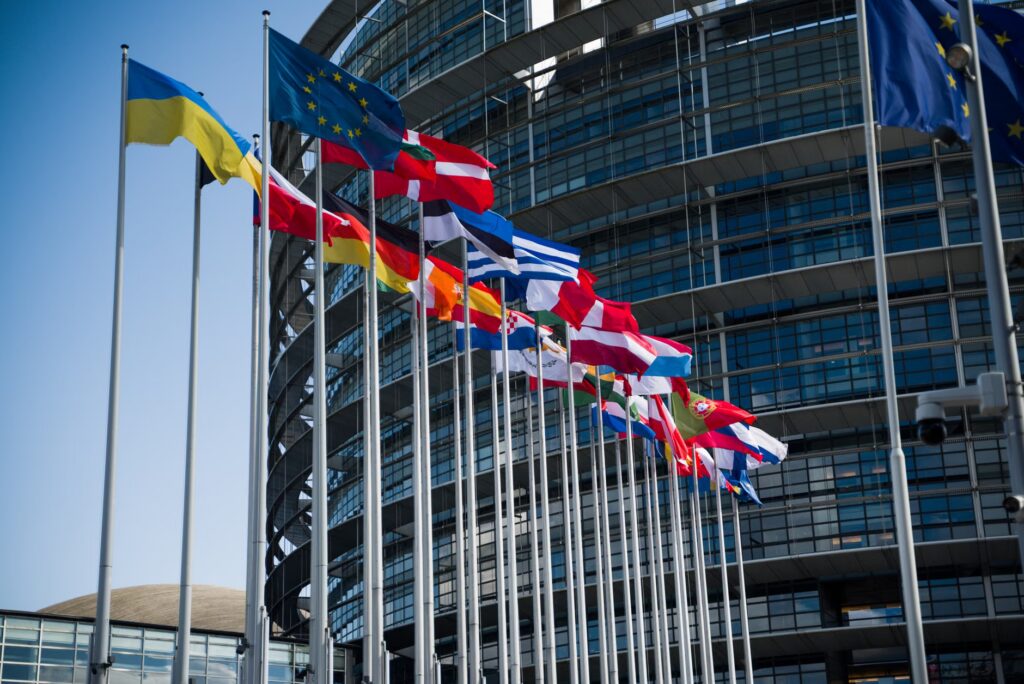
The State of the Union address is the Commission president’s annual set-piece speech to the European Parliament, used to define the institution’s priorities for the year ahead. Announcing a Canada strategy in that setting signals that Brussels intends to treat the file as a headline priority rather than a technical dossier handled by trade officials.
The choreography of the two days is the part worth watching. A prime minister sitting in the chamber for the speech, then returning to the podium the next day to address MEPs directly, is a deliberate piece of political staging designed to give the partnership visible momentum before the detailed negotiation begins.
| September 16, 2026 | European Commission president expected to outline the plans in her State of the Union address in Strasbourg |
| September 17, 2026 | Canada’s prime minister expected to address European lawmakers |
| Stated focus areas | Defence, space and research cooperation, alongside trade |
| Signed legal text | Not specified in the reporting |
| Financial commitments | Not mentioned |
Readers following the run-up will find the earlier groundwork covered in our report on how the EU-Canada partnership has been taking shape ahead of the Strasbourg speech.
Defence, Space and Research: What Each Pillar Would Actually Involve
The reporting identifies the three cooperation pillars but not their mechanics. Based on how the EU generally structures third-country participation, here is what each pillar typically governs, offered as general context rather than as confirmed terms of this package:

- Defence: Industrial and procurement cooperation, joint capability development, and the terms on which non-EU firms can compete for or supply into European defence programmes.
- Space: Access to satellite navigation, earth observation and secure connectivity programmes, plus launch, sensor and Arctic-monitoring collaboration.
- Research: Participation in EU research funding programmes, which determines whether Canadian universities and firms can lead or only join consortia.
The distinction between observer status and full participation is where the commercial value sits. For Canadian aerospace, satellite, quantum and advanced-materials firms, the difference between being eligible to bid and being eligible to lead is the difference between a marketing line and a revenue line.
The Counterweight Argument: Two Middle Powers Doing the Same Math
The stated rationale — building a counterweight to US- and China-dominated power politics — reflects a calculation both capitals have arrived at independently. Canada’s trade exposure to a single neighbour and the EU’s dependence on external security guarantees create parallel vulnerabilities, and both have spent recent years discovering how quickly rules-based assumptions can be renegotiated.
Diversification, however, is easier to announce than to execute. Trade flows follow geography, logistics and existing supply relationships, and a transatlantic partnership does not rewrite the fact that the vast majority of Canadian exports move north-south. The realistic ambition is marginal reduction of dependency in strategically sensitive sectors, not wholesale reorientation.
That is why the defence, space and research framing matters more than the trade framing. Those are precisely the sectors where policy choices, rather than freight economics, determine who does business with whom.
What Already Connects Ottawa and Brussels
The new package would be layered on an existing architecture, not built from nothing. As general background, Canada and the EU already operate under the Comprehensive Economic and Trade Agreement, provisionally applied since 2017, which removed the large majority of tariff lines between the two economies while leaving several chapters awaiting ratification by individual member states.
A Strategic Partnership Agreement covering political and foreign-policy dialogue runs alongside it, and the two sides have in recent years moved to formalise security and defence consultation as well. Canada is also associated with parts of the EU’s flagship research programme. The Strasbourg announcement, on the reporting available, appears intended to knit these separate strands into a single, higher-ambition relationship.
What Canadian Business Should Watch After the Speeches
For companies, the practical questions are narrower than the diplomacy suggests. Procurement eligibility, standards recognition, data and export-control rules, and the treatment of Canadian-owned subsidiaries under European industrial programmes are the provisions that will decide whether the partnership shows up on a balance sheet.
Three sectors have the most obvious exposure:
- Defence and aerospace suppliers: Watch whether Canadian firms gain qualifying-supplier status in European programmes or remain subject to local-content thresholds.
- Critical minerals and processing: Watch whether the package attaches offtake, permitting or financing mechanisms to supply-chain language.
- Research-intensive firms and universities: Watch the participation tier granted under EU research funding, and whether Canadian entities can act as project coordinators.
Domestic industrial policy is moving in a compatible direction, as seen in the $4.7-billion VIA Rail order that returned passenger car manufacturing to Canada. At the same time, Ottawa’s willingness to hold firm against US pressure on cultural policy — evident in the way the CRTC pressed ahead with Cancon streaming rules the US fought in trade talks — helps explain why a second major partner has become politically attractive.
Where the Detail Is Still Missing
Several of the questions that determine whether this becomes a durable alliance or a strong communiqué are unanswered in the available reporting. No legal instrument, signing date, ratification pathway or budget figure has been specified. Nor is it clear whether the package will be presented as a single framework agreement or as a series of sectoral arrangements concluded on separate timelines.
The ratification question is the one with the longest tail. Agreements that touch member-state competences can require national approvals, a process that has historically taken years and occasionally stalled. Until the legal form is public, the ambition described in Strasbourg should be read as a statement of political intent.
Figures, scope and timing described above reflect what has been reported ahead of the addresses and may change once official texts are released.
Frequently Asked Questions
Is Canada applying to join the European Union?
No. Canadian officials are described as seeking cooperation up to the point of membership, not membership itself, with defence, space and research named as the focus areas.
When will the plans be made public?
The European Commission president is expected to outline them in her State of the Union address in Strasbourg on September 16, 2026, with Canada’s prime minister addressing European lawmakers the next day.
Does this replace the existing Canada-EU trade agreement?
Nothing in the reporting suggests CETA is being replaced. The new package is described as a broader relationship spanning trade and security, which would sit alongside existing arrangements.
Has a signed agreement or funding commitment been announced?
Not specified. No legal text, ratification timetable or financial figure has been reported at this stage.


