


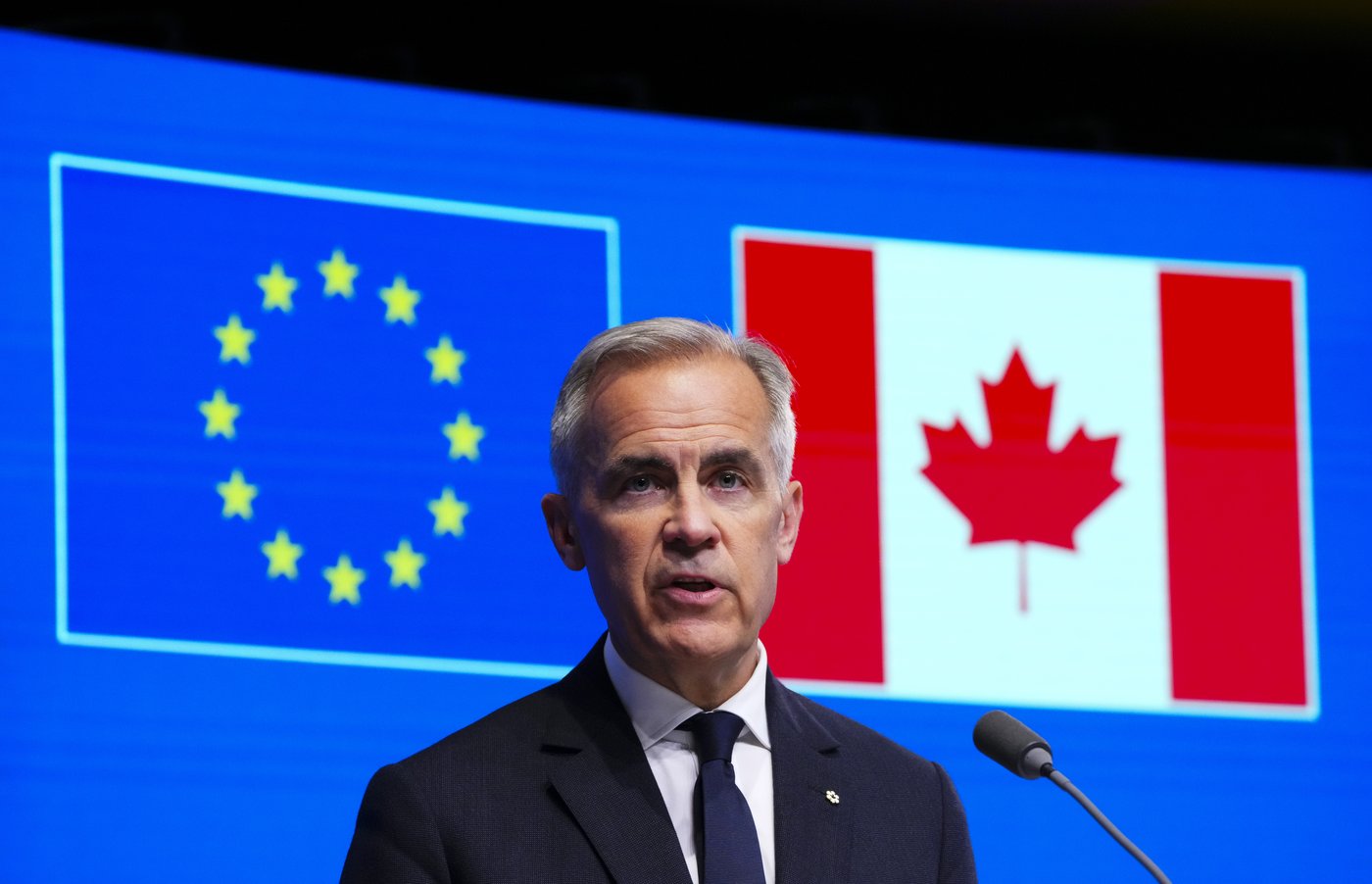
Brussels' ambassador in Ottawa explains why next week's European Parliament address is a starting point, not a signing ceremony.
The European Union is building an EU-Canada partnership that does not resemble any arrangement Brussels currently has with a non-member country, the bloc’s ambassador in Ottawa said on September 9, 2026, days before Prime Minister Mark Carney is due to address the European Parliament in Strasbourg. Ambassador Geneviève Tuts described the emerging framework as “something unique,” and cautioned that the Strasbourg visit is more likely to open a negotiation than to close one.
Her comments, made as speculation built around a possible agreement being unveiled next week, effectively reset expectations on both sides of the Atlantic. What is on the table, according to Tuts, is a discussion about a possible new partnership — followed by rounds of internal consultation in Europe and in Canada before anything can be formally announced.
What Geneviève Tuts Said About “Something Unique”
Tuts, the EU’s ambassador to Canada, said the bloc is crafting a relationship with Ottawa unlike anything that currently exists. She tied that work directly to a statement Carney made last month, when the prime minister said he was pursuing “a much stronger and deeper security and economic partnership” with the European Union.
The ambassador’s framing matters because it moves the conversation away from the idea of Canada slotting into an off-the-shelf European template. Instead, she signalled that officials are designing a bespoke arrangement, with security and economic cooperation sitting side by side rather than being handled in separate tracks.
No draft text, chapter list or scope document was made public in her remarks. The specific sectors to be covered, the legal form the partnership might take, and whether it would require ratification by national parliaments were all not specified.

Why the EU-Canada Partnership Will Not Copy the Swiss, Norwegian or UK Models
Tuts was explicit that the arrangement will not look exactly like the deals the EU maintains with Switzerland, Norway or the United Kingdom. Those three relationships are the most frequently cited reference points whenever a close non-member country deepens ties with Brussels, and each solves a different problem.
The following is general background context on those models, not a description of what Canada is being offered:
- Norway: participates in the EU’s single market through the European Economic Area, adopting large volumes of EU rules without a vote on writing them.
- Switzerland: operates through a long series of sector-by-sector bilateral agreements rather than a single overarching treaty.
- United Kingdom: trades with the EU under a post-Brexit agreement built around zero tariffs but with customs and regulatory checks, plus separate cooperation arrangements.
Ruling all three out points to a fourth path — one shaped by geography. Canada is not a neighbour of the EU, does not seek single-market membership, and is not unwinding a prior relationship. Any partnership therefore has to be justified on strategic grounds rather than proximity.
The Exceptional Invitation to Address the European Parliament
Carney is scheduled to speak to the European Parliament in Strasbourg, France, next week. Tuts characterised the invitation as exceptional for a non-European leader — a detail that carries diplomatic weight in its own right.
Addresses to the full chamber by leaders from outside Europe are rare, and the Parliament’s choice of speakers functions as a political signal about which relationships the institution wants to elevate. For Ottawa, the podium offers something a communiqué cannot: a direct case made to the 705 elected members whose committees and votes will eventually shape how any partnership is received in Brussels.
The exact date and time of the address, the themes Carney intends to raise, and whether he will hold separate meetings with EU leadership around the visit were not mentioned.
Why No Deal Is Expected to Be Signed in Strasbourg
Media reports had suggested an EU-Canada agreement could emerge from next week’s meeting. Tuts pushed back on that reading, saying she instead expects discussions on a possible new partnership.
That distinction is more than diplomatic hedging. In the EU system, the Commission and the External Action Service can explore and draft, but the political authority to conclude a substantial partnership rests with the member states — and, depending on the content, with the European Parliament. A leader’s speech does not substitute for that machinery.

Canada faces a parallel constraint. Trade, procurement, labour mobility, professional credentials, energy and natural resources all touch provincial jurisdiction, which is why Ottawa consults the provinces before committing to international economic arrangements.
The Two Consultation Tracks Standing Between Now and an Announcement
According to Tuts, the sequence runs in parallel. Brussels would consult its member states while Canada consults the provinces, with both processes feeding into a possible announcement at a summit in late October.
| Stage | What is expected |
|---|---|
| Carney’s European Parliament address, Strasbourg | Discussions on a possible new partnership; no deal signing anticipated |
| EU internal step | Consultation with member states |
| Canadian internal step | Consultation with the provinces |
| Summit, late October | Possible announcement of the partnership |
The summit’s host city, date and participant list were not specified in the ambassador’s remarks. Nor was it stated whether an announcement in late October would represent a signed instrument, a political declaration, or a mandate to begin formal negotiations.
The Trade Backdrop Shaping Ottawa’s Interest in Europe
The push toward Europe is unfolding while Canada’s trading relationship with the United States remains under strain. Diversification has moved from a talking point to an operating assumption across several federal files, from procurement to cultural policy — the same pressure visible in Ottawa’s decision to treat the Canadian film and television industry as a red line in trade discussions.
Industrial policy is moving in the same direction. The federal commitment to bring passenger rail car manufacturing back to Canada through a $4.7-billion VIA Rail programme illustrates how supply-chain security has become part of the economic conversation, and defence and transport equipment are areas where European suppliers are already active.
Regulatory sovereignty is the other live question. Ottawa’s insistence on proceeding with CRTC streaming rules that Washington contested in trade talks shows the government is prepared to defend domestic rule-making even when a major partner objects — a stance that will be tested again if a European partnership carries regulatory alignment expectations.
What Canadian Businesses and Provinces Will Be Watching
For readers tracking the file, the substance will be decided in the details that have not yet been published. Several specific questions will determine how consequential the partnership becomes:
- Scope of the security component: whether it extends to defence procurement participation, industrial cooperation, or is limited to policy coordination — not specified so far.
- Economic content beyond existing arrangements: Canada and the EU already trade under the Comprehensive Economic and Trade Agreement, so any new framework needs to add something CETA does not already cover.
- Provincial buy-in: which provinces raise concerns during consultations, particularly on procurement and resource sectors.
- Legal form: whether the outcome is a treaty requiring ratification or a political framework that can be implemented administratively.
- Timeline discipline: whether the late-October summit produces an announcement or another round of process.
Until those elements are on paper, the honest description of the state of play is the one the ambassador gave: a partnership being crafted, not a partnership concluded. The next verifiable milestone is Carney’s Strasbourg address, with the late-October summit identified as the point where an announcement becomes possible.
Frequently Asked Questions
Is Canada signing an agreement with the EU next week?
No. Ambassador Geneviève Tuts said she expects discussions on a possible new partnership rather than a deal being signed during Carney’s visit.
What did Carney say he wanted from the European Union?
Last month he said he was pursuing “a much stronger and deeper security and economic partnership” with the EU, which Tuts identified as the basis of the current work.
Why won’t the partnership resemble the EU’s deals with Norway, Switzerland or the UK?
Tuts said the arrangement will be “something unique” and will not look exactly like those existing models. The reasons behind that design choice were not detailed in her remarks.
When could an announcement actually come?
Possibly at a summit in late October, after Brussels consults EU member states and Ottawa consults the provinces. The summit’s location and exact date were not mentioned.
Why is Carney’s European Parliament address considered unusual?
Tuts described the invitation as exceptional because Carney is a non-European leader, and full-chamber addresses by such leaders are uncommon.