


What von der Leyen's State of the Union offer actually puts on the table for Canada — and the treaty, ratification and political hurdles standing in the way.
The European Union’s most senior official has publicly invited Canada to become a Canada EU associate member — a status that does not yet exist in the bloc’s founding treaties. European Commission President Ursula von der Leyen made the proposal during her annual State of the European Union address in Strasbourg on September 16, 2026, with Prime Minister Mark Carney watching from the chamber.
The offer was framed as part of what von der Leyen called an “alliance for the future,” and it lands at a moment when Ottawa is actively looking for economic partners beyond the United States. It also leaves a large number of questions unanswered, starting with what the status would actually involve.
“The Highest Level Possible”: What von der Leyen Told the European Parliament
Speaking to Members of the European Parliament, von der Leyen said the EU wants to bring its relationship with Canada “to the highest level possible,” and that partnerships urgently need to be reimagined. She then said she would like to work on opening the door to Canada becoming the first associate member of the European Union.
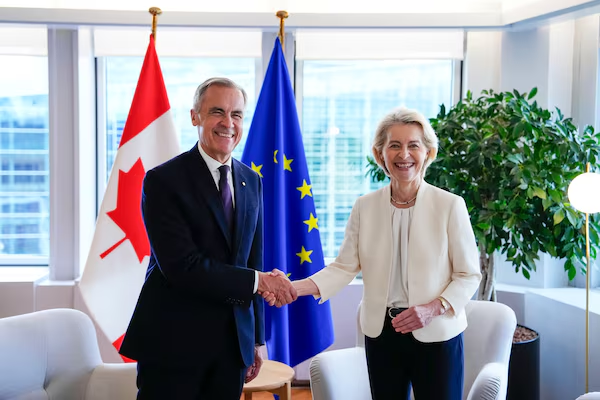
The remark drew prolonged applause. Carney was invited to the podium to shake hands with the Commission President, a piece of political stagecraft that gave the proposal an unusually warm launch for an idea with no legal template behind it.
The State of the Union speech is the annual address in which the Commission President sets out the EU’s priorities for the year ahead. While it covered a broad agenda, von der Leyen devoted significant time to Canada — itself a signal of where Brussels sees strategic value.
Moving Past CETA Toward a “Common Prosperity and Economic Security Space”
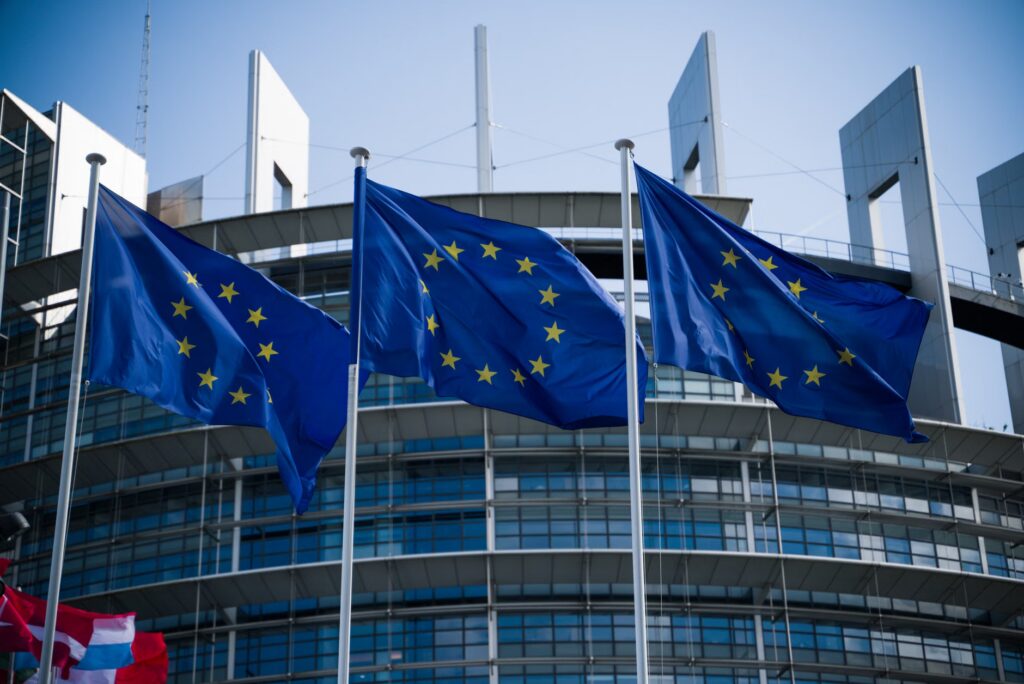
The existing legal foundation of the relationship is the Comprehensive Economic and Trade Agreement, or CETA, signed in 2016. Von der Leyen told MEPs the ambition now is to move beyond CETA and build what she described as a common prosperity and economic security space.
The work programme she outlined is broad and industrial rather than narrowly commercial:
- Intelligent manufacturing: joint work on advanced production capacity.
- A technology alliance: a dedicated framework for cooperation on tech.
- Integrated defence production: tying Canadian and European defence industrial capacity more closely together.
- An Arctic flagship project: making the Arctic a joint priority area.
- Energy, critical minerals and batteries: supply-chain and resource cooperation.
- Artificial intelligence and quantum science: research and deployment collaboration.
- Cyber and economic security: resilience against coercion and disruption.
Addressing the obvious subtext, von der Leyen said the arrangement “is not a partnership against anyone else. But for our common strength” — a reference to trade tensions with U.S. President Donald Trump.
Why the Norway, Iceland and Switzerland Model Was Reportedly Ruled Out
Neither leader spelled out how associate membership would differ from what the EU already has with close non-member states. Norway, Iceland and Switzerland hold arrangements that provide access to the EU’s single market and guarantee free movement of people, workers and capital.
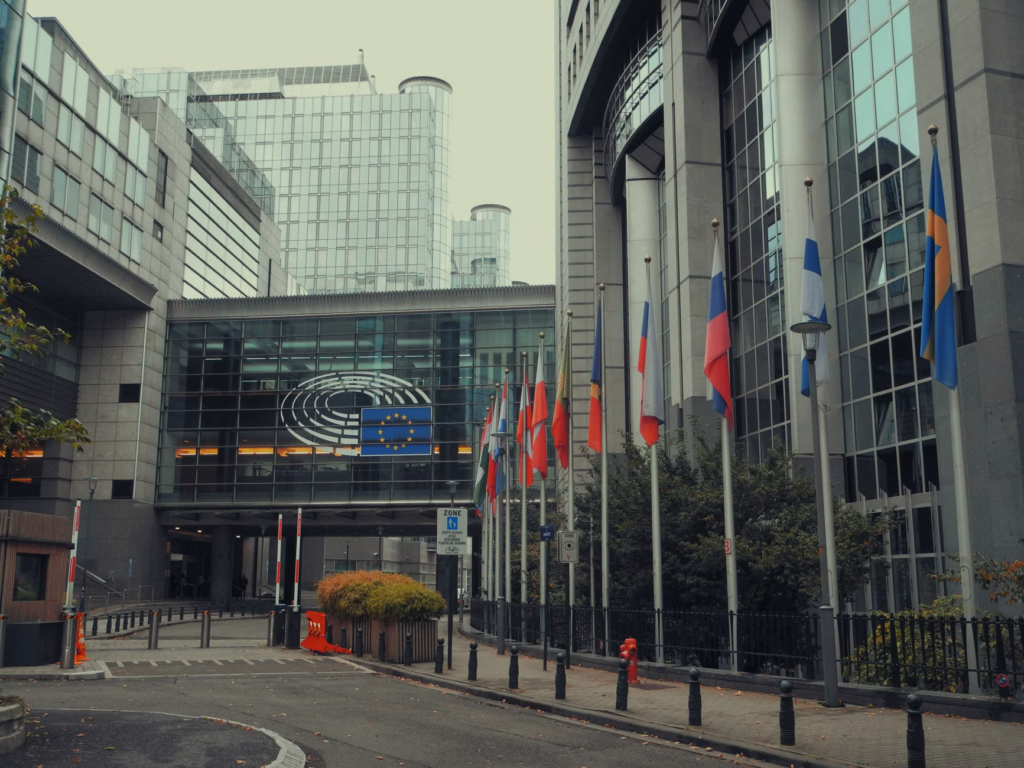
The trade-off in those models is significant. All three contribute to the EU budget and must follow EU regulations without a vote on them. Carney has reportedly ruled out that route over concerns about surrendering too much sovereignty — a concern his own office echoed in welcoming the Strasbourg overture as a way to strengthen, not dilute, Canadian sovereignty.
The EU also maintains association agreements with more than 20 countries, offering varying degrees of market access and obligation. Those agreements have in many cases taken decades to negotiate and require the approval of all 27 member states.
Nobody Knows What It Is Yet, Says the Parliament’s Canada Delegation Chair
Javier Moreno Sánchez, the Spanish MEP who chairs the European Parliament’s delegation for relations with Canada, was candid about the uncertainty. Because it would be the first such status, he said, nobody knows exactly what it will be.
He ruled out the possibility of Canada electing MEPs or holding seats on EU commissions, while suggesting the relationship would likely go further than a conventional association agreement. “We have to be creative and work together to fulfill this status,” he said, adding that the political signal — that the two sides want to be very close — is what matters most for now.
Moreno Sánchez acknowledged that some MEPs have questioned the legality of the status, since associate membership is not set out in the Treaty on European Union. His counter-argument was precedent: the EU has operated outside the treaty before, including when it launched the euro and developed the Schengen Agreement on free movement. He also floated the idea that the new status could eventually serve as a template for Britain, Japan or Australia.
The Ratification Hurdle: CETA Still Awaits 10 Member States
Any upgrade to the relationship runs into the EU’s approval machinery, and CETA is the cautionary example. Signed in 2016, it has still not been ratified by 10 EU members, including France, Italy and Ireland.
That record matters for Canadian businesses weighing how quickly a deeper arrangement could translate into practical market access. Unanimous consent among 27 governments — described by participants as a tortuous process — is the standard that association-style deals have historically had to meet.
Pushback From Brothers of Italy and France’s National Rally
Support in the chamber was not universal. Nicola Procaccini, an MEP from the right-wing Brothers of Italy party led by Italian Prime Minister Giorgia Meloni, asked how the United Kingdom did not have priority for associate membership, and accused von der Leyen of “bowing to Prime Minister Carney.”

Jordan Bardella, president of France’s populist National Rally, told MEPs the “current system is reaching its end,” arguing that “when the money is European, the jobs need to be in Europe. When the money is French, the jobs need to be in France.”
The timing of that objection is not incidental. National Rally leader Marine Le Pen is the party’s candidate in the French presidential election in April and leads most opinion polls; if she wins, Bardella is widely expected to be appointed prime minister. Analysts say neither would be likely to back a closer relationship with Canada if it threatened French jobs or raised member-state financial contributions. Both Brothers of Italy and National Rally are Euroskeptic parties, although Meloni has softened her position and now describes herself as a “Eurorealist.”
Why Canadian Business Is Watching the Defence and Minerals Files
For Canadian firms, the most concrete items on von der Leyen’s list are the industrial ones. Integrated defence production would bear directly on a sector that has already been expanding its European footprint, including through the Canada-Ukraine drone production deal signed in Calgary.
Critical minerals, batteries and energy sit alongside that, and they connect to the investment-attraction agenda Ottawa has been running domestically. Carney’s European trip followed the Canada Investment Summit that opened with the Prime Minister before the Strasbourg leg, where resource and manufacturing players including Canadian Premium Sand were among the participants.
None of these workstreams has a published timetable, scope or funding figure at this stage. Until negotiating mandates are set on both sides, the commercial detail remains unspecified.
Carney’s Liverpool Stop and Thursday’s Address to the European Parliament
Carney left France on Wednesday evening for Liverpool, where he attended an Everton–Wolverhampton Wanderers match with Prime Minister Andy Burnham, a committed Everton supporter. It was the first meeting between the two leaders since Burnham took office in July, and they were expected to discuss closer ties with Europe, NATO and trade.
The Prime Minister was scheduled to return to France after the game to deliver his own speech to the European Parliament on Thursday. An EU-Canada summit is also ahead, and in Ottawa the Conservatives have argued that Carney should seek Parliament’s approval before taking Canada into the EU as an associate member.
Frequently Asked Questions
Does “associate member” already exist in EU law?
No. The status is not outlined in the Treaty on European Union, and some MEPs have questioned its legality. Supporters point to the euro and the Schengen Agreement as precedents for acting outside the treaty.
Would Canada get seats in the European Parliament?
Moreno Sánchez, who chairs the Parliament’s delegation for relations with Canada, ruled out Canada electing MEPs or having representatives on EU commissions.
Is this the same as the Norway or Switzerland arrangement?
No details have been released. Those countries get single-market access and free movement but contribute to the EU budget and follow EU rules without a vote, an option Carney has reportedly rejected on sovereignty grounds.
What happens to CETA?
CETA remains the existing treaty. Von der Leyen’s proposal is to build beyond it; CETA itself is still unratified by 10 member states, including France, Italy and Ireland.
When would any agreement take effect?
Not specified. Comparable EU association agreements have taken years or decades to negotiate and require approval from all 27 member states.