


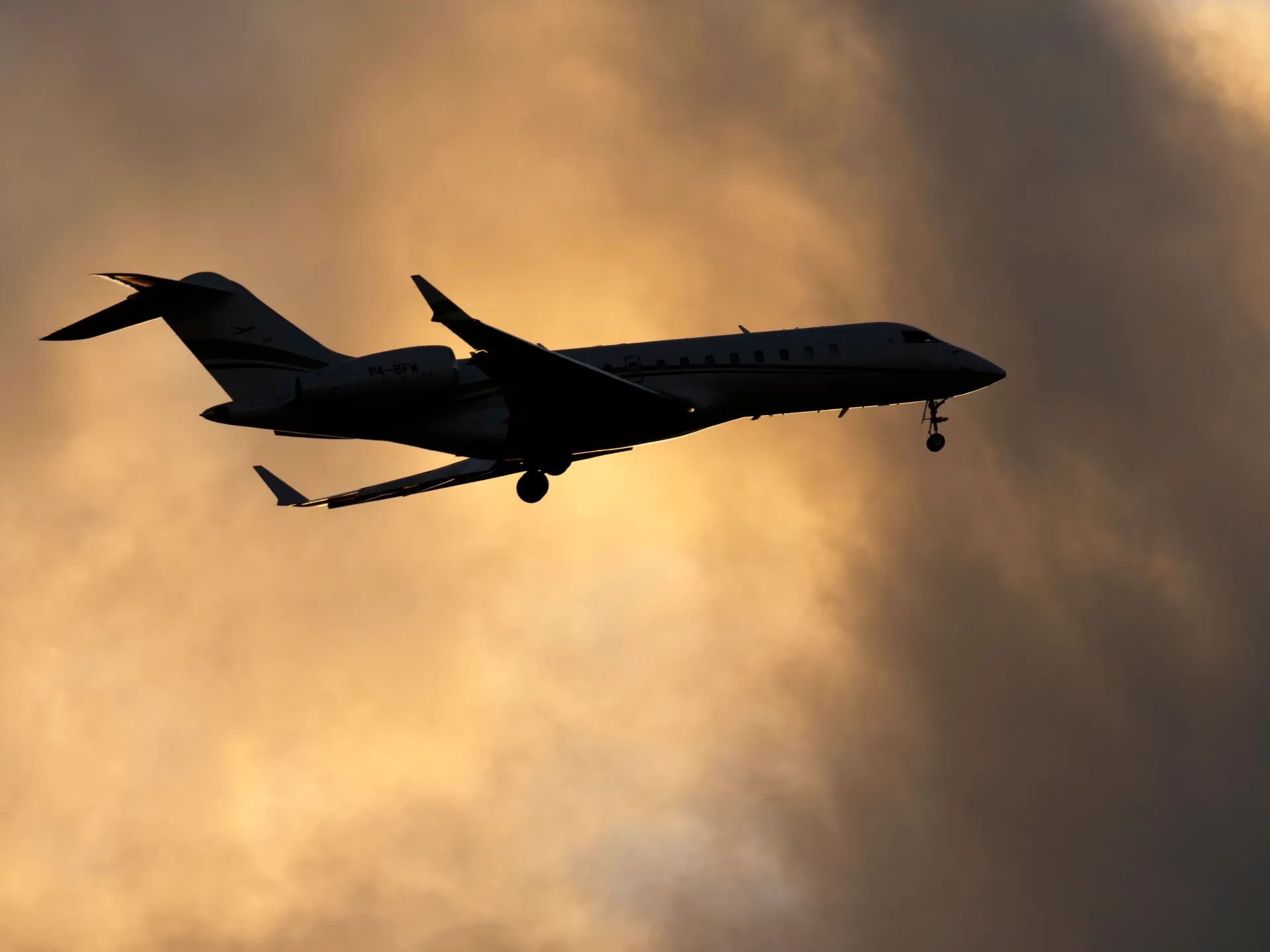
A breakdown of what Trump actually said about the Canadian jet maker, why NetJets is the order book to watch, and how the threat fits into a trade file that has now turned into $20bn of counter-tariffs.
The Bombardier US sales threat is back on the table. United States President Donald Trump said on Monday that the Montreal-headquartered aircraft manufacturer should no longer be allowed to sell into the American market unless it starts building its aeroplanes on US soil ? a demand delivered by social media post rather than through any formal trade or regulatory channel.
The timing was not incidental. Trump’s remarks landed hours before Canada’s retaliatory tariffs were due to take effect in the early hours of Tuesday, and after several weeks in which negotiations between Ottawa and Washington visibly deteriorated. For a company whose customer base sits overwhelmingly south of the border, it is the second direct hit from the same source this year.
What Trump Actually Posted About Bombardier
“NO MORE SELLING BOMBARDIER IN THE UNITED STATES! Their products aren’t good enough!” Trump wrote. “If they want our Market, they must build here, and stop treating America like a ‘piggybank’.”
He went further in the same message, arguing that the manufacturer is dependent on American demand. “Over 50% of their revenue comes from the United States ? They live off American Buyers, American Companies, American Airports, and American Service,” he said. That revenue figure is Trump’s own characterisation; it has not been independently confirmed in the reporting on his statement.
The post also widened into a broader grievance about market access, accusing Canada of blocking American banks and companies and singling out one aerospace rival in particular: “They even blocked Gulfstream Aerospace from doing business in Canada ? Completely unjust and unfair! That Era is OVER!”
No executive order, tariff schedule, regulatory notice or effective date accompanied the statement. What has been reported is the demand itself and the reasoning behind it.
The January Decertification Threat That Sank the Share Price
This is not the first time Bombardier has been named by Trump since he returned to office in 2025. In January, shares in the company plunged after he threatened to decertify its large-cabin business jets and to impose 50 percent import tariffs on new aircraft until Canada certified the latest aeroplane produced by US rival Gulfstream.
That episode matters for reading Monday’s post, because it establishes a pattern: the pressure is being applied at the point where aviation regulation and trade policy overlap. Certification is what allows an aircraft type to be operated and sold in a given jurisdiction, so a threat aimed at certification is, in commercial terms, a threat aimed at revenue.
As general industry context ? not a detail from this announcement ? civil aircraft certification is normally handled by national regulators whose approvals are recognised across borders under long-standing bilateral arrangements. That mutual recognition is precisely what makes the machinery unusual to see invoked in a trade quarrel, and it is why January’s threat moved the stock so quickly.
Why the NetJets Order Book Is the Number to Watch
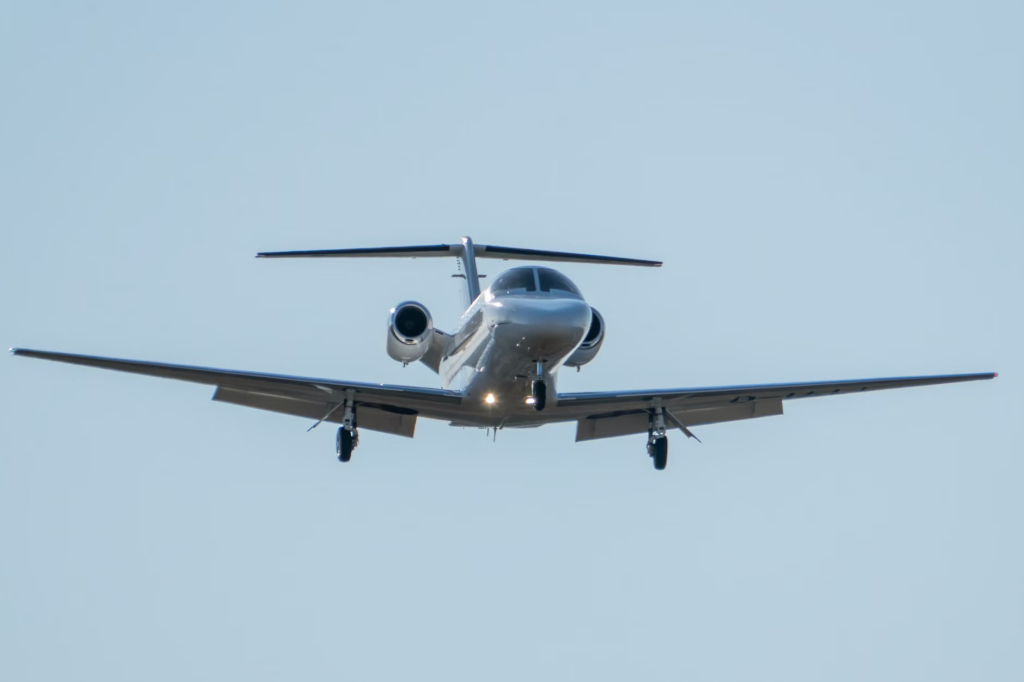
The most concrete commercial exposure identified in the reporting sits with large private jet operators, and NetJets in particular ? one of Bombardier’s biggest purchasers.
In December 2023, the Columbus, Ohio-based operator signed an agreement to buy 12 Challenger 3500 jets outright, with an option to purchase up to a further 232 aircraft at a later date. That structure is common in fractional-ownership and large-fleet aviation: a firm order plus a long option tail that converts over years depending on demand.
It also means the option tail, not the firm order, is where policy risk shows up first. Options are easier to leave unexercised than contracts are to cancel, and buyers weighing a multi-year fleet plan tend to price in regulatory uncertainty well before any tariff is actually collected.
- Firm orders: 12 Challenger 3500 jets, agreed in December 2023.
- Options: up to 232 additional aircraft, exercisable later.
- Operator base: Columbus, Ohio ? squarely inside the market Trump is talking about restricting.
- Company response: Bombardier did not respond to a request for comment on the threat.
Canada’s $20bn Counter-Tariff Package on 700 US Goods
The aerospace threat sits inside a much larger and now-active trade confrontation. Trump has imposed a series of tariffs on Canadian products, and Ottawa’s retaliatory measures were scheduled to come into force early Tuesday, covering nearly $20bn worth of 700 different American goods.
Readers following the file will recognise the escalation path ? the same set of pressures we tracked in our look at tariffs, bank earnings and auto talks dominating the Canadian business week, and the legal questions raised by Washington’s use of blunt import-restriction powers, which we examined in our explainer on the WTO and USMCA limits on a Section 338-style import ban.
The distinction worth holding onto is between what has legal force and what does not. Canada’s counter-tariff list is a published, dated measure with a schedule of affected goods. The Bombardier demand, as reported, is a public statement of intent with no instrument behind it yet.
Where the Carney Government’s Position Stands
Canada’s response has so far been framed as willingness to deal paired with impatience at the process. Prime Minister Mark Carney has said Canada is ready for an agreement with the US that benefits both countries, while also saying Washington must “start being serious” if the dispute is to be resolved.
That two-track posture ? keep the door open, let the retaliation proceed on schedule ? is consistent with how Ottawa has handled other flashpoints this year. Our earlier report on the threat to Bombardier’s US sales as tariffs loomed set out the same dynamic from the domestic side.
What the Bombardier US Sales Threat Means for Canadian Business Readers
For Canadian manufacturers and brand builders watching this from outside aerospace, there are three transferable lessons in the episode.
- Concentration risk is now political risk: a single dominant export market is an operational strength until it becomes a policy lever. Trump’s argument rests entirely on Bombardier’s reliance on American buyers.
- Regulatory approval is part of market access: certification, licensing and standards recognition can be pressured in ways that tariffs cannot, and they move faster than trade litigation.
- Long-dated order books absorb shock quietly: the damage from uncertainty often appears as options that never get exercised rather than as cancelled contracts, which makes it slower to see in headline numbers.
Aerospace is also one of the more tightly integrated cross-border industries on the continent, with components, maintenance and service networks that do not sit neatly on one side of the border. Any attempt to force final assembly into a single country runs into that reality ? a general structural point about the sector rather than a claim about how this particular dispute will resolve.
Some of the figures in circulation here remain unverified, including the claim about the share of revenue drawn from the US. Investors and suppliers should treat the revenue characterisation as a political assertion until confirmed by company disclosure.
Frequently Asked Questions
Has any formal ban on Bombardier sales in the US been enacted?
No. As reported, Trump made the demand in a social media post on Monday. No order, tariff schedule or effective date for a Bombardier-specific sales restriction was announced.
What exactly is Canada’s retaliation, and when does it start?
Canada’s retaliatory tariffs were set to take effect early Tuesday and cover nearly $20bn across 700 different American goods. The specific product list was not detailed in the reporting.
How does the Gulfstream dispute connect to this?
In January, Trump threatened to decertify Bombardier’s large-cabin jets and impose 50 percent import tariffs on new planes until Canada certified the newest aircraft built by US rival Gulfstream. He returned to that grievance on Monday, accusing Canada of blocking Gulfstream Aerospace from doing business there.
Which customer is most exposed if sales are restricted?
Reporting points to large private jet operators, notably NetJets, which agreed in December 2023 to buy 12 Challenger 3500 jets with an option for up to 232 more.
Has Bombardier commented?
No. The company did not respond to a request for comment on the threat.