


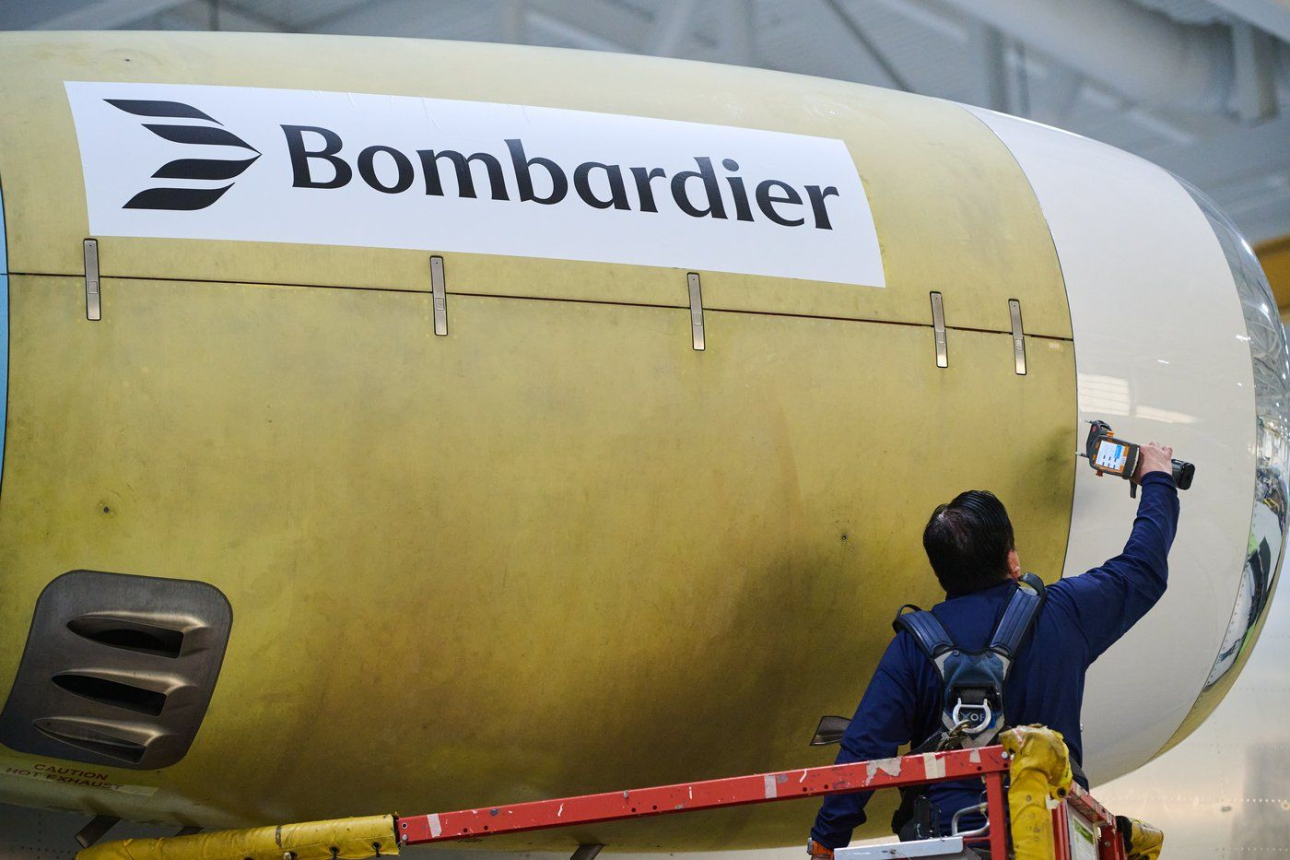
Inside the aerospace manufacturer's point-by-point defence of its American footprint, and how the threat landed hours before Canada's counter-tariffs kicked in.
Bombardier US sales became the newest flashpoint in the Canada–United States trade fight on Monday, after President Donald Trump said on social media that he would block the Quebec-based aerospace manufacturer from selling into the American market unless it builds its aircraft south of the border. The threat landed with roughly a day to go before Canada’s retaliatory tariffs were due to take effect at 12:01 a.m. EDT Tuesday.
Bombardier did not stay quiet. In a detailed statement issued later the same day, the company argued that it already manufactures in the United States on a substantial scale, employs people in more than 20 states, and buys from thousands of American suppliers. Quebec Premier Christine Fréchette called the company a flagship of the provincial economy, and a Republican senator from Kansas said he had contacted the White House directly to make the case for Bombardier’s operations in Wichita.
“If They Want Our Market, They Must Build Here”
Trump’s post was short and conditional: if Bombardier wants access to American customers, he wrote, it must build in the United States. No executive order, formal trade action or legal mechanism was described alongside the statement, and none has been detailed publicly.
That matters for readers trying to gauge how much weight to put on the threat. As with earlier moves in this dispute, the announcement arrived first as a social media message rather than as a published measure with an effective date, a tariff line or an enforcement agency attached. What is documented so far is the statement itself and the reaction it produced.
Bombardier’s Answer: More Than 20 States and 2,800 US Suppliers
The company’s rebuttal was essentially an inventory of its American presence. Bombardier said the US aerospace industry is “a clear winner on trade and exports” and that it contributes to that outcome by creating tens of thousands of jobs across the country.
- Direct employment: staff in more than 20 US states.
- Physical sites: Kansas, Texas, Arizona, Florida, Connecticut, Illinois, Delaware, California, Washington, D.C. and New Jersey.
- Supply chain: roughly 2,800 American firms across 47 states.
- Components: American-made engines and avionics used on its aircraft.
“Bombardier values its great partnership with American companies and its US employees,” the statement said, adding that the plan is to keep investing in its people, customers and the communities where it operates across the country.
Where the Global 8000’s Wings and Flight Controls Are Made
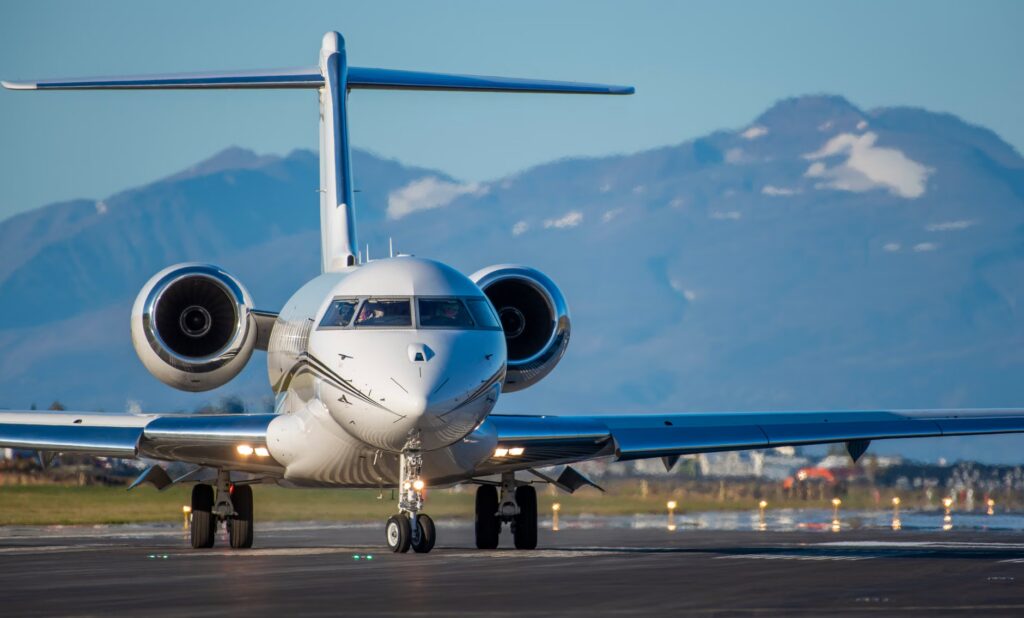
Two specific manufacturing facts sat at the centre of Bombardier’s argument. The wings for the Global 8000 — marketed by the company as the world’s fastest business jet — are produced at a Bombardier plant in Red Oak, Texas. Flight control components are built at the company’s Los Angeles facility.
Those details are the crux of the response to Trump’s “build here” demand: on the company’s own account, the highest-value structural and control work on its flagship aircraft already happens inside the United States. Final assembly work at sites such as the Mississauga, Ont. plant remains Canadian, which is the part of the footprint the president’s message targets.
Fréchette Calls Bombardier “A Source of Pride for Quebec”
Quebec Premier Christine Fréchette said she would not answer Trump’s provocations with more provocations. Writing in French on social media, she described Bombardier as a source of pride for Quebec, a flagship of the provincial economy and a major player in its aerospace industry, noting that thousands of Quebec workers showcase the province’s expertise internationally.
She also said she had reached out to Bombardier chief executive Éric Martel to offer the company the province’s full support. No specific provincial support programs, funding or countermeasures were announced in connection with that outreach.
A Republican Senator Defends Bombardier’s Wichita Workforce
The pushback was not confined to Canada. Kansas Senator Jerry Moran, a Republican, said he had contacted the White House to ensure the president was aware of Bombardier’s contributions to his state and of the importance of the company’s presence in Wichita for workers at Bombardier and across its local supply chain.
Moran said Bombardier employs more than 1,000 people in Wichita and that he would keep working to see the company’s manufacturing operations remain in Kansas and continue to grow and create American jobs. It is a reminder that a threat aimed at a Canadian manufacturer also reaches American constituencies — and that aerospace supply chains cut across the border in both directions.
How the Standoff Reached Tuesday’s Tariff Deadline
The Bombardier episode is the latest turn in a dispute that has been building since Trump returned to office in 2025 and began applying tariffs to goods from most countries. Canadian steel, aluminum, auto and forestry sectors have been among the hardest hit.
- Canada scales back: Ottawa’s initial retaliation was later reduced.
- July escalation: Trump threatened new levies unless Canada went further — ending provincial bans on US liquor sales, dropping reciprocal tariffs on US-made autos, and addressing a long-standing American complaint about Canada’s limits on tariff-free US dairy imports.
- Mid-August breakdown: Prime Minister Mark Carney suspended talks just before a tariff deadline, saying Washington had inserted unacceptable last-minute demands that threatened Canadian sovereignty.
- 50 per cent duties: The next day, Trump imposed 50 per cent duties on $28 billion in Canadian goods, including hockey sticks, cement, honey and cosmetics.
- Canada’s answer: Ottawa said it would apply countervailing tariffs on the same value of American goods — dairy products, plywood and sunscreen among them — effective 12:01 a.m. EDT Tuesday.
Readers following the sequence week by week will recognise the pattern from our earlier coverage of tariffs, bank earnings and auto talks dominating the Canadian business week, and from the separate order setting a start date for a US ban on Canadian alcohol imports.
What Carney Said Instead of Responding Directly
Carney did not address Trump’s latest posts on Monday. In a Labour Day statement, he said Canada was working to diversify its trading partners and that the country works best “when we look out for one another.”
“Canada is growing stronger and less dependent on any single partner. We are already giving ourselves far more than anyone can take away,” he said. The framing — resilience and diversification rather than direct rebuttal — has been consistent with Ottawa’s posture through several rounds of this dispute.
Poilievre Wants the Failed Deal Published
Conservative Leader Pierre Poilievre, speaking to reporters in Regina, pressed for more transparency. He said Canadians need to see how much the counter-tariffs will cost consumers and businesses, and what the government will do to offset those costs.
He also renewed his call for Carney to release the full text of the trade deal that collapsed with Washington, arguing voters should be able to judge what was left on the table. “All Canadians stand united in denouncing the president’s unacceptable tweets, trolling and tariffs, and we have to stand united for its workers and all of our people,” Poilievre said, adding that Canadians “deserve the facts and a plan.”
Small Businesses Warn of Closures as Counter-Tariffs Bite
The Canadian Federation of Independent Business warned that small firms could be forced to close as a result of the trade war, despite supports announced by Ottawa. That caution points to the less visible half of the story: a 50-per-cent duty on a marquee export makes headlines, while counter-tariffs on inputs such as plywood raise costs quietly across thousands of smaller balance sheets.
The legal room available to either side is also narrower than the rhetoric suggests, a point we examined in our analysis of the WTO and USMCA limits on sweeping US import restrictions.
Why Aerospace Production Is Difficult to Relocate
General industry context, not drawn from the company’s statement: business-jet manufacturing is among the most integrated cross-border industries in North America. Airframes, engines, avionics and flight control systems are certified as packages by aviation regulators, and moving a production line usually means re-qualifying tooling, suppliers and certifications rather than simply shifting labour.
That is why announcements about relocating aircraft assembly tend to play out over years, not quarters — and why Bombardier’s response leaned on documenting what it already builds in the United States rather than promising anything new. No new investment, plant or hiring commitment was announced in the company’s statement.
Frequently Asked Questions
Has any formal ban on Bombardier’s US sales actually been imposed?
No. What has been reported is a social media threat from the president. No mechanism, effective date or formal trade measure was specified.
When did Canada’s retaliatory tariffs take effect?
They were set to come into force at 12:01 a.m. EDT on Tuesday, covering American goods including dairy products, plywood and sunscreen.
How much Canadian trade is covered by the 50 per cent US duties?
Trump imposed 50 per cent duties on $28 billion in Canadian goods, including hockey sticks, cement, honey and cosmetics. Canada’s countervailing tariffs cover the same dollar value of US goods.
Does Bombardier manufacture in the United States today?
Yes. The company says it has sites in 10 named states and Washington, D.C., staff in more than 20 states, and about 2,800 US suppliers across 47 states. Global 8000 wings are built in Red Oak, Texas, and flight control components in Los Angeles.
Has Quebec announced financial support for Bombardier?
Not mentioned. Premier Christine Fréchette said she offered the company’s chief executive the province’s full support, but no specific program or funding was detailed.