


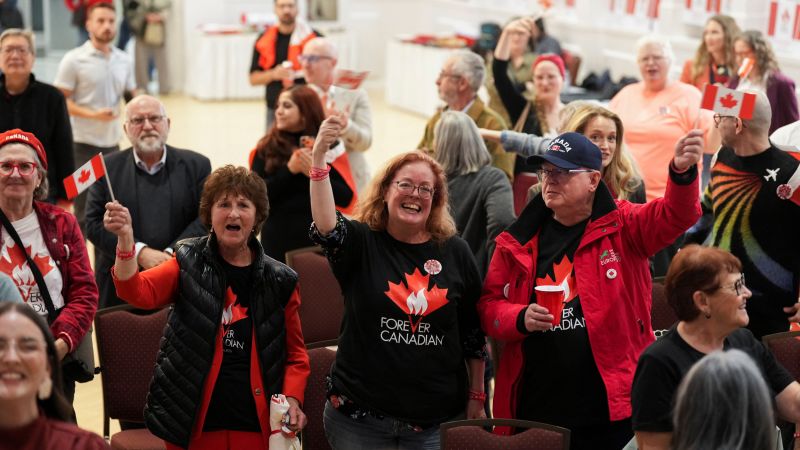
Here is what Albertans rejected, why separatists pushed for the vote, and how this result fits into Canada's long history of unity referendums.
Albertans have voted to keep their province in Canada. In a non-binding Alberta referendum held on Sunday, October 19, 2026, voters rejected a path toward secession, delivering a significant defeat to a separatist movement that was small but vocal and had sought support from the United States.
The vote was the first of its kind in Canada since Quebec’s referendum on sovereignty in 1995. For three decades, the question of whether a province might leave the federation had stayed mostly in the history books. This week it returned to the ballot box, and the answer was no.
What Albertans Rejected at the Ballot Box on October 19
The referendum asked Alberta voters to weigh in on separating from Canada. Voters turned that option down. As a result, the province stays inside the federation, and the separatist campaign has lost the democratic mandate it hoped to win.
The vote was non-binding, so even a different outcome would not have removed Alberta from Canada automatically. Still, a referendum result carries significant political weight. Separatists had hoped a win would give them leverage with Ottawa. The loss takes that leverage away.
The available reporting does not include several details readers will want, so the summary below marks them as such.
| Item | Detail |
|---|---|
| Date of vote | October 19, 2026 |
| Type of vote | Non-binding provincial referendum |
| Outcome | Secession rejected; Alberta remains part of Canada |
| Historical significance | First such vote in Canada since Quebec in 1995 |
| Final vote share | Not specified in the source reporting |
| Voter turnout | Not specified in the source reporting |
For a look at the campaign before the ballots were counted, see our earlier coverage of Albertans voting on whether to stay in Canada.
A Separatist Campaign That Looked South for Support
The independence push in Alberta never reflected the mainstream of provincial opinion. Its organizers were few in number but loud, and they drew attention by looking to the United States for backing. Seeking support from a foreign country was one of the campaign’s most controversial features.
That strategy may have increased the movement’s profile, but it did not produce a majority at the polls. The result is widely seen as a major setback for the separatists. It raises hard questions about whether their cause can stay politically relevant after voters have now rejected it directly.
Context: Movements that seek outside help often face a credibility problem at home. Opponents can frame them as serving foreign interests rather than local ones. The reporting does not say whether this was decisive in Alberta. Even so, appeals to Washington were a large part of the national conversation about the campaign.

Underrepresentation in Parliament and Fears for the Oil and Gas Sector
The separatist case rested on two main complaints. Both have long shaped Alberta’s relationship with Ottawa.
- Political representation: Separatists argue that Alberta has too little weight in Parliament. In their view, the province’s voice in national decisions does not match its population or its economic contribution.
- Federal climate policy: They argue that Ottawa’s climate agenda threatens Alberta’s fossil fuel industry, which is central to the province’s economy, jobs, and public revenue.
Context: These complaints are not new. Albertans have long felt alienated from federal decision-making, especially when energy, pipelines, and emissions policy are involved. Many residents share some of these frustrations without supporting independence. The referendum appears to confirm that difference: voters can be unhappy with Ottawa and still choose to stay in Canada.
The grievances themselves have not disappeared because of the vote. The debates over seat distribution, fiscal transfers, and climate rules will continue. They now return to the usual channels of federal-provincial negotiation instead of a fight over sovereignty.
Why the Alberta Referendum Was Canada’s First Since Quebec 1995
Canada has held very few votes on whether a province should leave. The best known took place in Quebec. Its 1980 referendum was defeated decisively. Its 1995 referendum failed by a margin of about one percentage point and remains one of the most dramatic nights in Canadian political history.
Historical context: The 1995 result led to lasting changes in how Canada approaches secession. In 1998, the Supreme Court of Canada ruled that a province has no right to secede on its own under the Constitution or international law. The court also said a clear majority voting on a clear question would create a duty to negotiate. Parliament then passed the Clarity Act in 2000, which gave the House of Commons a role in judging whether a referendum question and result met that standard.
The Alberta vote is the first time in this post-Quebec framework that a province has formally tested the question. It took place 31 years after Quebec’s second referendum, in a very different economic and political climate, and it was driven by Western grievances rather than linguistic and cultural identity.
What a Non-Binding Vote Can and Cannot Do
Because the referendum was non-binding, its main effect is political rather than legal. A vote for secession would not have started an immediate exit. Instead, it would have opened a long and uncertain period of constitutional negotiation involving the federal government and the other provinces.
By rejecting secession, Albertans have closed that door for now. No negotiations will take place, the constitutional status quo remains, and the separatists cannot claim a popular mandate when pressing Ottawa for concessions.

Context: Non-binding referendums can also work as pressure valves. They let a frustrated part of the electorate make its case at the ballot box. A clear rejection can strengthen the position of leaders who argue for reform within the federation rather than an exit from it.
What the Outcome Signals for Business Readers and Investors
For Brand Magazine’s business audience, the result has practical meaning. The prospect of a province leaving Canada creates uncertainty about currency, trade, regulation, contracts, and the treatment of cross-border investment. A rejected secession bid removes that uncertainty, at least for now.
General market context: Companies operating in Alberta, including firms in energy, agriculture, finance, and technology, generally prefer stable institutions. The province’s business community is closely tied to national markets, federal infrastructure, and Canada’s trade agreements. Staying in the federation keeps those relationships intact. The source reporting does not include any market data or reaction from specific companies.
The policy disputes that fuelled the separatist campaign, especially over climate regulation and the fossil fuel industry, will still affect Alberta’s investment climate. Business leaders can expect those arguments to continue within normal federal-provincial politics.
Questions the Result Leaves for Edmonton and Ottawa
The vote settles the immediate question but leaves others open. Several points will be worth watching in the coming weeks:
- The final numbers: The size of the margin and the turnout will shape how strongly both sides can interpret the outcome. These figures were not specified in the reporting available at publication.
- The separatists’ next move: Whether the movement regroups, changes its message, or fades after this defeat is still unclear.
- Ottawa’s response: Federal leaders may treat the result as an opportunity to address Western concerns about representation and energy policy, or they may see it as confirming the status quo.
- The U.S. dimension: The campaign’s appeals to the United States may continue to affect Canada-U.S. relations, even though the bid itself failed.
Our results coverage, Alberta voters choose to stay in Canada, has more on how the night unfolded.
For now, the message from Alberta’s voters is simple. Many have serious complaints about how the country is run, but most are not prepared to leave Canada over them.


